
Heading into Fall
November is the time to turn off irrigation systems for the winter rainy season and reflect on the past growing season. Consider whether your plants received proper watering and plan any needed updates to your irrigation system or consider replacements with more drought-tolerant plants. Drought stressed and dry landscape plants easily ignite and create a ready path for fire spread. The stressed plants are also more vulnerable to pests and diseases.
Tips for Replanting
When replanting, choose plants that match your watering limitations and maintenance schedule, and be mindful of fire-smart spacing. Select low-maintenance plants so it’s easier to keep up with pruning needs and cleanup of leaf and plant debris (fuel for wildfire).
Plant Spacing
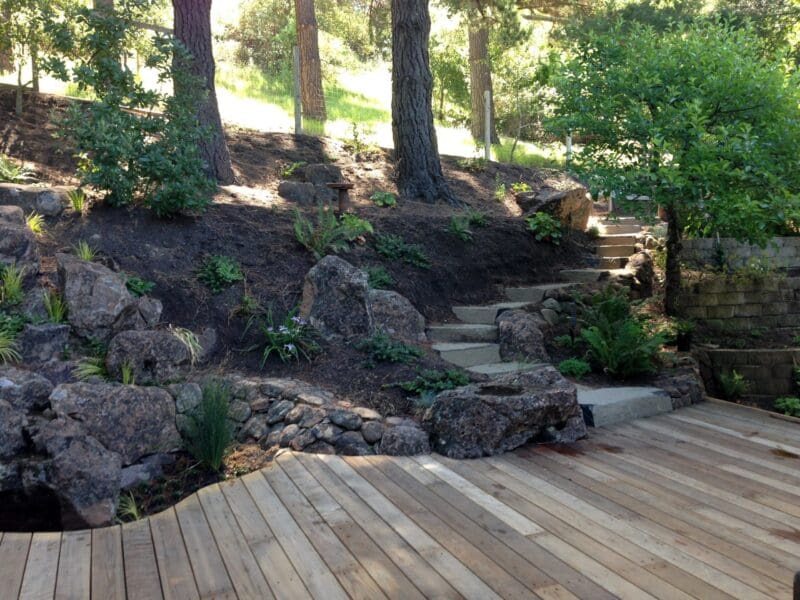
Plant spacing plays a key role in creating a fire-smart garden. Group plants in islands separated by non-combustible materials such as pebbles, decomposed granite, or flagstone pathways to help slow or stop fire spread. Maintain vertical separation between shrubs and trees – flames can reach three times a plant’s height. For fire-safe clearance, limb trees 6–10 feet above the ground or about one-third of their height, and avoid planting tall shrubs beneath them.
Create a Beautiful Fire Smart Yard
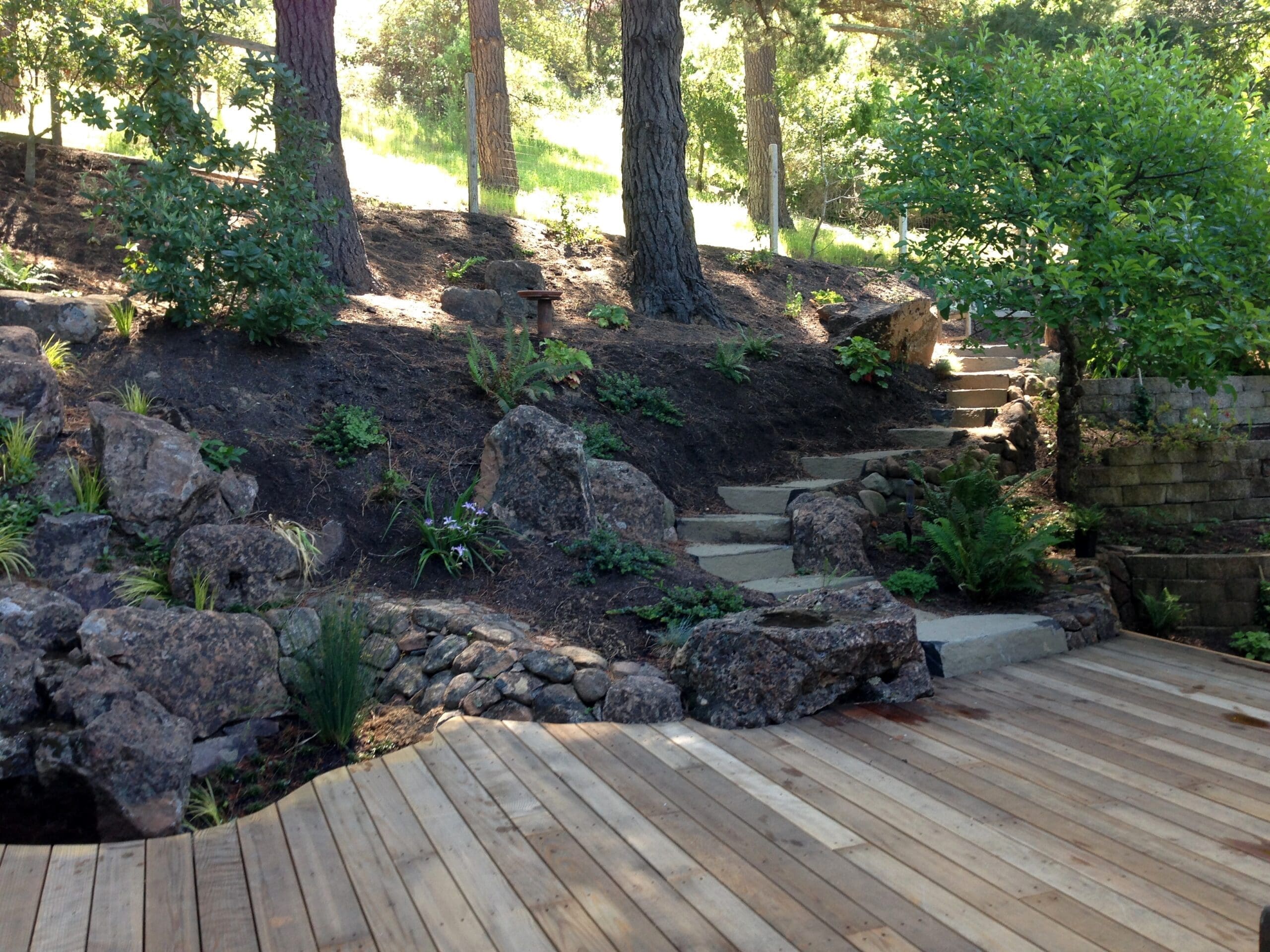
Enhance both aesthetics and safety by using seating areas, boulders, or dry creek beds as natural fire breaks and visual focal points. Replace continuous hedges, which create unbroken fuel for fire, with staggered plantings or by strategically placing shrubs in front of windows or seating areas (outside of zone zero) to maintain privacy. Berms can also add visual interest, privacy, and soil benefits.
Planting on Slopes
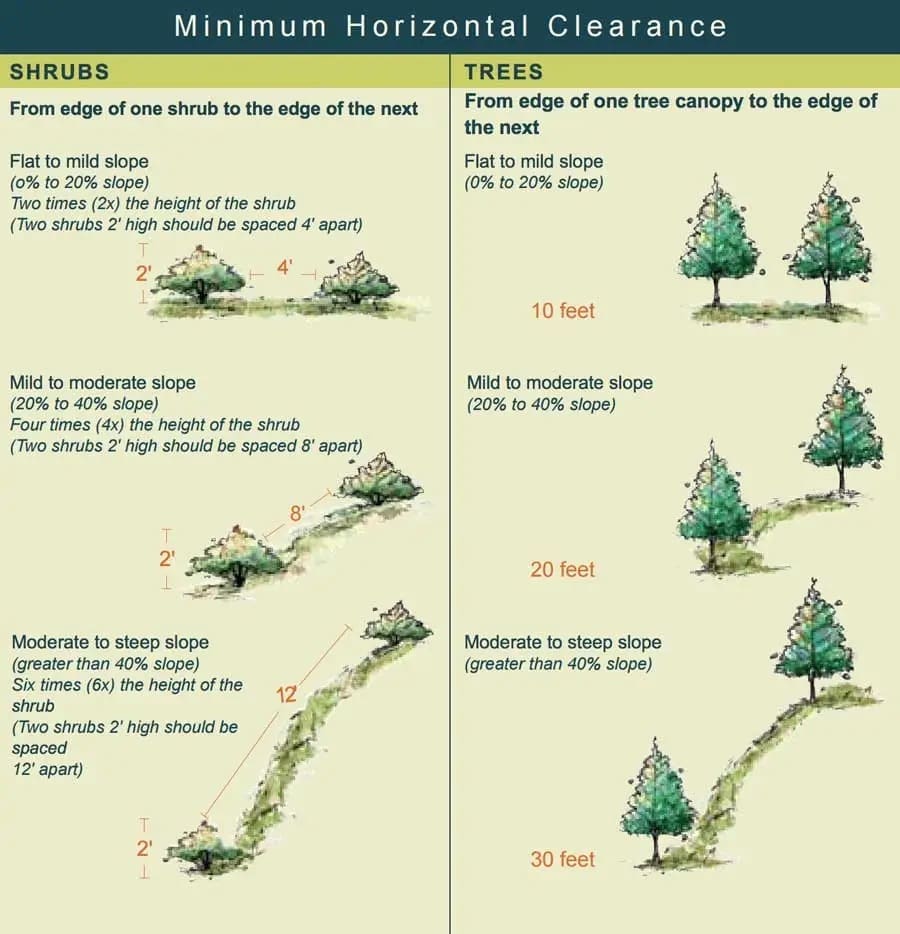
On slopes, increase spacing between trees and shrubs as the slope steepens to reduce fire spread and improve plant health.
Horizontal spacing:
- On a mild slope (0-20% slope), space trees at least 10 feet apart from their dripline and space shrubs 2x their height from each other.
- On a medium slope (20-40%), space trees at least 20 feet apart and shrubs 4x their height.
- On a steep slope (over 40%), space trees at least 30 feet apart and shrubs 6x their height.
- Avoid planting trees in rows or hedges.
Vertical spacing:
- Remove tree branches that are within 6 feet from the ground on trees that are 18 feet or taller.
- If shrubs are under a tree, maintain a vertical clearance of 3x the shrub’s height between the top of the shrub to the lowest branch of the tree.
- When creating vertical space under trees, prioritize the tree’s health by ensuring that the upper two-thirds of the tree has branches.
By thoughtfully selecting and spacing plants, you can create a landscape that is not only more resilient to wildfire but also beautiful, earth-friendly, and easier to maintain year-round.