

Since all plants burn, there’s no universal fire-safe plant list. What matters most are placement, spacing, maintenance, and plant characteristics.
Placement Matters–know your defensible space zones
The best wildfire defense starts with location. Keep Zone Zero—the first five feet around your home, decks, and sheds—clear of plants and combustibles.
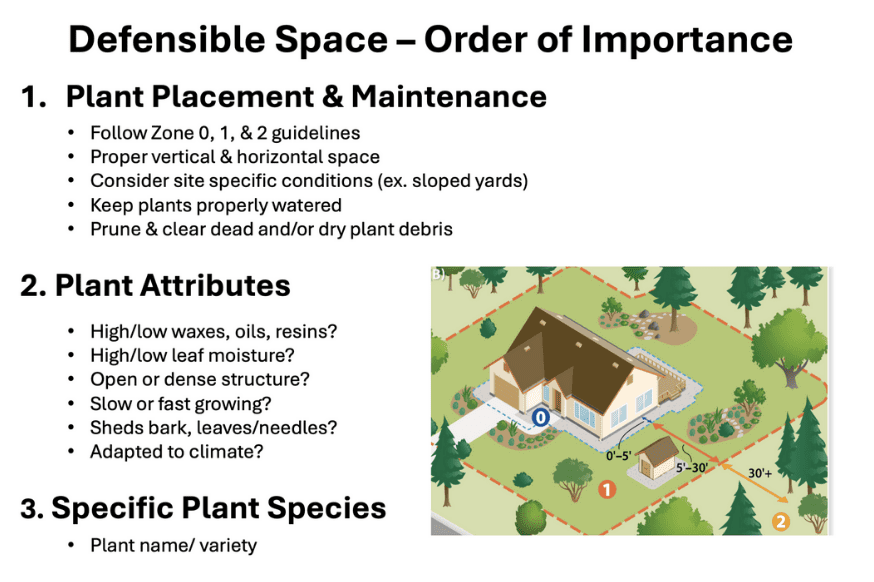
In Zone One (5–30 feet out), aim for “lean, green, and clean.” Space plants well, water and prune them regularly, and use shorter plants closer to the house maintaining horizontal spacing, with taller ones farther out. Maintain vertical clearance by pruning tree branches up 6–10 feet (or one-third the tree’s height), and avoid ladder fuels by planting only low-growing vegetation beneath trees.
Group plants in islands separated by stone or other non-combustible materials to slow fire spread and ease maintenance. On slopes, increase spacing—the steeper the slope, the more distance required.
Choosing the Right Plants
Favor plants with high moisture and open branching over resinous, dense, or thatchy ones. Choose species you can maintain, since bark, leaves, and needles ignite easily. California natives are excellent—drought-tolerant and ecologically valuable—but clear away their summer leaf drop.
Maintenance is Key
No matter what you plant, upkeep is essential. Regularly remove debris, hydrate plants, and thin or replace vegetation as it matures. A well-cared-for garden looks beautiful and strengthens your home’s wildfire defense.
With thoughtful design and maintenance, your landscape can thrive while protecting your home.
Learn more about maintaining a fire-smart landscape at Marin Master Gardeners.
More information on fire-smart landscaping.