
Wildfire Safety and Ecology Can Work Together
In Marin County, wildfire prevention has not always been an easy conversation.
For years, wildfire mitigation efforts sometimes came with tension. Fire professionals were focused on reducing risk and protecting communities. Environmental advocates were concerned about habitat loss, over-clearing, and damage to sensitive landscapes. Land managers often had to navigate both, while working under growing pressure as wildfire risk intensified.
The Ecologically Sound Practices (ESP) Partnership grew out of a different idea: wildfire safety and ecological stewardship do not have to be at odds. In fact, in a place like Marin, they need to work together.
What is the ESP Partnership?
The ESP Partnership is a collaborative group of fire professionals, climate scientists, ecologists, land managers, and community leaders working to guide vegetation management and wildfire mitigation in Marin County.
Its foundation was built into the Joint Powers Authority that created the Marin Wildfire Prevention Authority (MWPA). That agreement recognized that wildfire risk should, to the extent feasible, be addressed through ecologically sound practices that minimize greenhouse gas release and protect biodiversity and landscape resilience.
In January 2020, more than 55 experts gathered at the Marin Conservation League to explore what that commitment could look like in practice. Participants included fire officials, fire ecologists, climate scientists, planners, native plant specialists, watershed experts, soil scientists, carbon management specialists, and environmental advocates. That conversations at that event made the ESP Partnership take shape.
Why this work matters
The question was never whether wildfire prevention was necessary. It was how to do that work in ways that also protect biodiversity, soil health, carbon storage, and long-term ecological resilience.
Over the next two years, a core group met regularly to draft and refine Ecologically Sound Practices for Vegetation Management. Those guidelines were reviewed by MWPA and formally adopted in 2022.
Through the process of creating those guidelines, ESP created a space for experts across disciplines to listen to one another, build a shared language, and develop trust around the difficult issue. This has helped bridge a gap that had often existed between environmental conservation and fire mitigation measures, showing that public safety and ecological care can be part of the same long-term strategy.
What has been the impact?
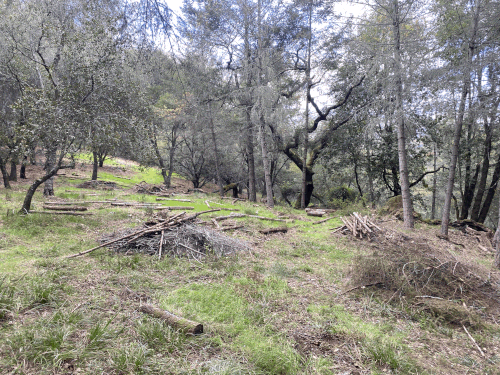
Today, ESP’s practices are integrated into MWPA’s approach to vegetation management, helping support wildfire mitigation that is both effective and ecologically responsible.
The partnership also continues beyond the original guidelines. Monthly forums, field trips, and technical discussions help keep agencies, specialists, and community leaders connected and engaged. Public summaries of that work help build transparency and shared understanding.
ESP has also influenced workforce development. The partnership contributed to curriculum development for Fire Foundry training programs, helping translate ecological principles into field-based practice for future fire and land stewardship professionals.
Marin’s model has drawn interest beyond the county, with other jurisdictions looking at whether this kind of consensus-based approach could help strengthen their own wildfire resilience efforts.
A model worth watching
In a county known for redwood groves, oak woodlands, coastal scrub, grasslands, wetlands, and rich biodiversity, stewardship requires care and nuance. ESP reflects a simple but important idea: protecting people from wildfire and protecting the landscapes that define Marin are connected goals.
That is what makes the ESP Partnership worth paying attention to. It is not just a set of guidelines. It is an example of what can happen when communities choose collaboration over division and work toward resilience with both safety and ecology in mind.
Learn more and take action
Wildfire resilience in Marin depends on more than work on public lands. It also depends on informed residents, safer homes, and practical action at the neighborhood level.
To explore more wildfire preparedness resources, visit Fire Safe Marin’s library of articles, guides, and how-to information on home hardening, defensible space, evacuation readiness, and vegetation management. You can also learn more about countywide programs and local actions that help reduce risk over time.
For more about the Ecologically Sound Practices Partnership itself, including guiding documents, best practices, and forum summaries, we encourage Marin resident to visit ESP online.