
New Insurance Models for Fire-Adapted Communities
California’s wildfire crisis continues to strain the home insurance market. Insurers across the state are limiting new policies, declining renewals, or exiting high-risk areas altogether, leaving many homeowners with fewer and more expensive options.
However, new research and real-world case studies point to a promising shift: as more communities begin to take action and invest in wildfire risk reduction, insurers are starting to recognize and reward those efforts.
The Successful Approach to Wildfire Risk and Insurance
Tahoe Donner
The Nature Conservancy and Willis, a global insurance brokerage firm, recently worked together to launch a wildfire resilience insurance policy that directly accounts for vegetation management and fire fuel reduction work. The insurance model was created with support from UC Berkeley’s Center for Law, Energy and the Environment, which demonstrates that measurable risk reduction can translate into insurance benefits.
The new policy approach was developed for the Tahoe Donner Association in Truckee, California, covering more than 1,300 acres of forested and recreational land. Unlike traditional insurance policies, this model included assessing accomplished mitigation work in the evaluation of wildfire risk for the community.
Tahoe Donner has had a strong commitment to long-term forest health work, including ecological thinning and fire fuel reduction, for many years. As part of their forest management program, their work has helped to slow fire spread, reduce ember exposure, and improve firefighting effectiveness during past fires. Because of those efforts, the new policy provided 39% lower premiums and 89% lower deductibles for the community when compared to estimates that didn’t evaluate the measurable mitigation factors.
McCloud HOA
In a similar situation, the McCloud community in Tahoe recently achieved lower insurance costs with the help of RockRose Risk, a forward thinking brokerage firm. Using McCloud’s documentation of their measurable mitigation action, RockRose leveraged advanced wildfire risk modeling, expert analysis and onsite risk assessments to create a data-driven, comprehensive risk profile for the community. This quantified assessment of the community’s wildfire mitigation efforts enabled RockRose to secure underwriters for McCloud, resulting in about a 30% cost savings for the residents.
Driven by this success, McCloud now allocates a portion of the insurance savings to continued wildfire mitigation efforts, reinforcing the community’s commitment to long-term risk reduction. With discounted premiums being reinvested into additional mitigation projects, it is anticipated that future insurance discounts will happen. This approach showcases a cycle of success where resilience increases, risk decreases, and insurance costs become more reasonable.
What This Means for Marin
Marin County is already a state-wide leader in wildfire preparedness through:
- Dedication to public outreach and community engagement.
- Continual and evolving education around defensible space and home hardening.
- Ongoing commitment to improving community awareness and proactive behaviors.
- Agency driven, large scale fuel reduction projects in Ross Valley, Novato, and southern Marin.
- Community driven fuel reduction efforts.
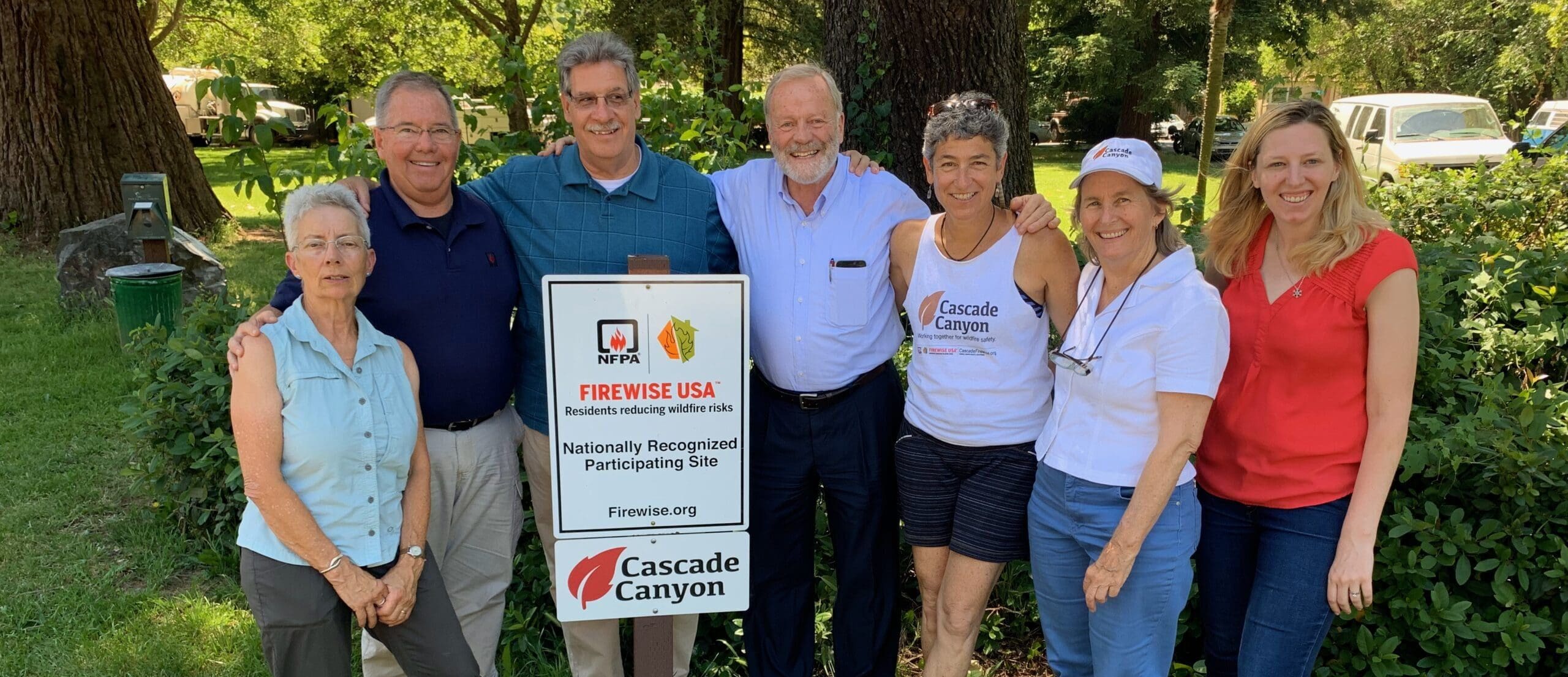
- Neighborhood participation in the Firewise USA program.
- Wildfire Risk Home Evaluation Program that provides personalized and prioritized reports to homeowners to support targeted risk mitigation work.
- Long term, large scale planning and prevention efforts.
Changes Happening at the State Level
The California Department of Insurance has approved new homeowners insurance rate filings from Mercury Insurance and CSAA under the state’s Sustainable Insurance Strategy, which is an important step toward improving insurance availability in wildfire-impacted areas. As part of the approval, Mercury committed to expanding coverage by more than 38,000 policies over time, including more than 6,000 in the next two years, with a focus on helping homeowners transition off the FAIR Plan. CSAA has also committed to continuing to write policies in California and to supporting a gradual, responsible path for homeowners seeking alternatives to the FAIR Plan.
For homeowners, this means more potential insurance options for property owners, especially for those who have struggled to find or keep coverage in higher wildfire-risk areas. The state is now linking rate approvals to real commitments from insurers to write more policies, rather than reducing availability. Insurers may use updated wildfire risk models when setting rates, but only if they also expand coverage. Over time, this approach is intended to restore competition and make steps like home hardening, defensible space, and risk reduction more impactful when shopping for or renewing insurance.
 Fire Safe Marin’s commitment to public resource/educational outreach, community preparedness and engagement, and on-the-ground risk reduction coordination aligns with the direction of these new, innovative insurance programs. Every defensible space project, fuel treatment, and neighborhood action contributes to a larger picture of reduced risk and increased resilience. And while no action can eliminate wildfire risk entirely, these case studies of Tahoe Donner and McCloud reinforce a powerful takeaway: risk reduction is a critical component and insurers are starting to factor it in.
Key “To Do” List for Homeowners
- Create and maintain defensible space within the first five feet of your home.
- Reduce vegetation and combustible materials near all structures on your property.
- Join or start a Firewise neighborhood, we are more effective and prepared together!
- Review the Wildfire Risk Home Evaluation Report for your dwelling.
- Document completed mitigation work (photos, receipts, inspection reports).
- Learn about common mistakes residents make with wildfire insurance.
- Stay informed through Fire Safe Marin’s monthly newsletter.