As wildfire seasons grow longer and more intense across California, one thing is clear: homes themselves play a critical role in wildfire resilience. While vegetation management and evacuation planning remain essential, research increasingly shows that how a home is built or retrofitted can determine whether it survives a wildfire.
The Retrofitting a Home for Wildfire Resistance: Costs and Considerations report, released in 2024 by Headwaters Economics, takes a close look at what it actually costs to make existing homes more ignition-resistant, and which upgrades deliver the biggest risk-reduction benefits.
The Big Picture: What it Costs & What Matters Most
One of the most important findings from the report is that effective wildfire retrofits do not always require major renovations. In fact, retrofitting is often more affordable than most people would expect. Most homes do not need a full retrofit and can meaningfully reduce wildfire risk through strategic improvements made over time.
For a typical 2,000-square-foot California home:
- Basic, targeted retrofits can cost around $2,000
- Selective high-impact upgrades often fall in the $10,000 to $15,000 range
- Comprehensive, top-tier retrofits can range from $60,000 to $100,000, but are rarely necessary to implement all at once
Why Homes Burn & How Retrofits Help
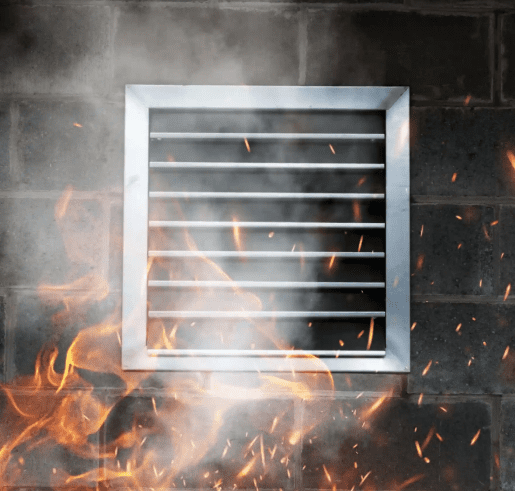
The report reinforces what wildfire scientists and fire agencies have learned over the last decade: most homes ignite from wind-blown embers, not from a wall of flames.
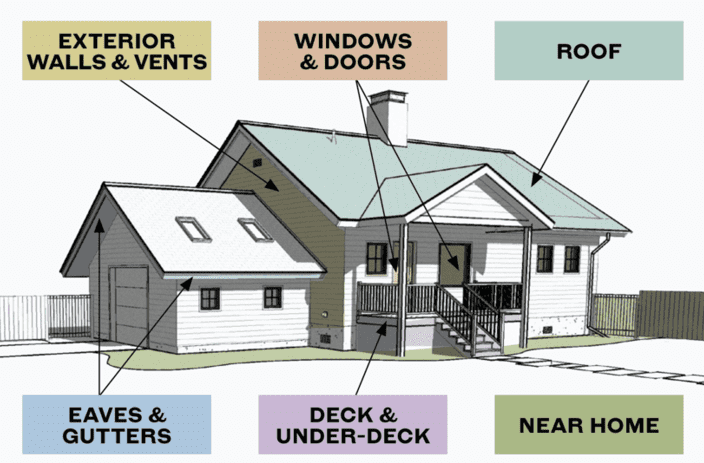
Embers can accumulate in gutters or enter vents and eaves. They can land on wooden decks, fences and mulch areas, causing them to ignite. Their size allows them to enter vents or slip through roof-to-wall and deck-to-wall areas around a building.
Many of the most effective retrofits focus on blocking ember entry and reducing ignition points, rather than trying to fireproof an entire structure. It is crucial to use noncombustible materials whenever possible and where they matter most.
High-Impact, Lower-Cost Improvements
Some of the most effective wildfire risk-reduction strategies identified in the report involve modest upgrades that can be paired with regular home maintenance.
Key cost-effective retrofits include:
- Replacing standard vents with ember and flame resistant vents
- Installing metal flashing at deck-to-wall and roof-to-wall intersections
- Keeping gutters clean and clear of debris, as well as adding metal gutter guards
- Removing combustible materials from decks and under-deck areas
- Replacing bark mulch with gravel or other noncombustible materials
- Replacing standard fencing and gates attached to the home or within 5 feet of the home with noncombustible material fencing and gates
- Creating and maintaining a 5-foot noncombustible Zone 0 around the home
Bigger Projects, Bigger Benefits
Some homes, especially older ones or those in dense neighborhoods or high-exposure locations, may benefit from more substantial retrofits. The report emphasizes that partial upgrades often go a long way, such as replacing only the lower portion of siding or the most exposed side of a home.
More substantial upgrades may include:
- Replacing wood shake roofs with a Class A fire-rated roof
- Converting open eaves to enclosed, noncombustible designs
- Upgrading single-pane windows to dual-pane tempered glass
- Replacing combustible siding near the ground or on high-exposure walls
- Retrofitting or replacing combustible decks
The Overall Strategy and What it Means for Marin
A key theme throughout the research is that home hardening works best when combined with good vegetation management and neighborhood-scale action. Homes that are ignition-resistant not only protect individual families, they also help reduce structure-to-structure fire spread, making entire communities safer. There are programs, such as California’s Wildfire Mitigation Program, that are helping make these upgrades more accessible, especially for income-qualified households.
For Marin residents and homeowners, the findings offer a practical and encouraging message: wildfire resilience does not require a single, expensive solution. Instead, strategic upgrades to exterior home components paired with defensible space and neighborhood-level action can meaningfully reduce risk.
Not everything has to be addressed at once. Small, smart upgrades make a major difference and proper maintenance and design choices matter as much as materials. The best combination is to create a Zone 0 and hardening the home to the best of your ability.


Assessing Your Risk and Taking Action
Residents are strongly encouraged to have their homes and yards evaluated by defensible space inspectors, which is done free of charge by local fire agencies. The evaluation results in a Wildfire Risk Report for the property which features personalized details and prioritized steps that can be taken to improve the wildfire resilience of the home and yard.
Wildfire resilience is not about making homes barren, lifeless or fortress-like, it’s about thoughtful design, using noncombustible materials, and reducing the ways fire can reach a structure. Fire Safe Marin has many resources available online, including one that specifically details what upgrades and retrofits can be made and how to implement them appropriately.
Fire Safe Marin continues to help homeowners understand their home hardening options, prioritize the most effective improvements, make good defensible space choices, and connect to neighborhood programs, such as Firewise, with broader wildfire-preparedness efforts aimed at strengthening community resilience.
Resilience is built step by step. Every upgrade you make, whether it is creating a defined Zone 0, replacing vents, or planning a larger retrofit, helps strengthen your home and your community. Fire Safe Marin encourages you to explore the many tools, how-tos, and wildfire safety resources across this website to take your next step with confidence. Our staff is also always happy to answer your questions directly.
Want to stay up to date? Sign up for our monthly newsletter