IN THE EVENT OF AN EMERGENCY THIS SITE IS NOT MONITORED. FOR CURRENT INFORMATION GO TO HTTPS://EMERGENCY.MARINCOUNTY.GOV.
Be Prepared for Smoke
Wildfire smoke is a regular part of fire season. The smoke can affect everyone, but certain groups, such as children, older adults, pregnant women, and people with pre-existing medical conditions, are especially vulnerable.
The good news is that there are practical steps every household can take to protect health and comfort on smoky days. Having a plan that includes setting up a clean air room, stocking necessary supplies, and knowing where to check air quality, will make a big difference.
While smoky skies can feel overwhelming, remember that simple steps add up. By planning ahead you give yourself and your family safer options when wildfire smoke rolls in.
Smoke Preparedness
Be Informed
For information on smoke, fire, or other emergency impacts, check the Marin County Public Emergency Portal. Be sure to register your cell phone number with Alert Marin, which is the notification system by which the Marin County Office of Emergency Management issues alerts.
Where to Find Smoke Forecast
Check air quality daily at AirNow.gov or on the AirNow mobile app, and register your cell phone number for smoke advisories.
How to Prepare for Wildfire Smoke
- Talk with your doctor if anyone in your household has asthma, COPD, or heart disease. Have a plan for managing symptoms.
- Keep a supply of medications, and easy-to-prepare or shelf stable food.
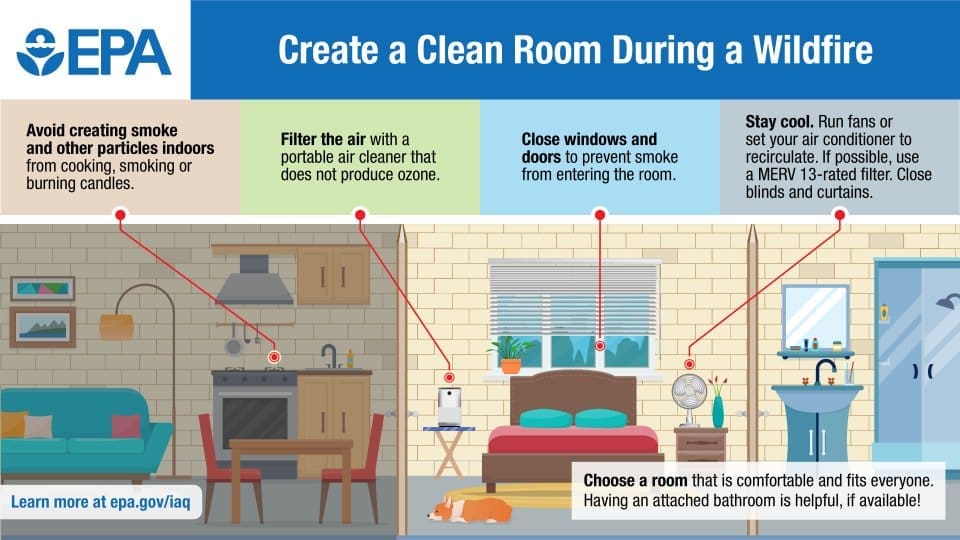
- Create a clean room: Choose a bedroom or other room with few windows/doors. Have a portable HEPA air purifier or DIY box fan filter ready to keep the air inside the room cleaner than the rest of your home.
- Maintain your HVAC system with the highest-efficiency filter it can safely use (MERV 13 or higher if compatible).
- Have N95 respirators for when you have to go outside. Make sure they fit snugly.
When There’s Smoke
- Stay indoors with windows and doors closed.
- Secure your “cleaner-air room” and run your air filter continuously. If possible, run the system on “recirculate”.
- Avoid activities that add indoor pollution (smoking, candles, frying, vacuuming without a HEPA filter).
- Reduce outdoor activity; postpone exercise or yardwork until air improves.
- In vehicles, keep windows closed and set air to recirculate.
What to do if your cleaner-air room isn’t enough
A cleaner-air room is one of the best defenses during smoky days, but it may not always be enough. If your home becomes too hot, the power goes out, or smoke is still getting inside, staying put may not be the safest option.
In these cases, consider leaving to:
- stay with friends or family outside the smoke-affected area.
- go to a designated public cleaner-air shelter or cooling center.
- seek relief in another location with good air filtration and air conditioning.
Having this option already in your smoke plan ensures you and your family have a safe place to go if indoor air becomes unhealthy.

After the Smoke Clears
Home Maintenance
- Air out your home once outside air quality improves.
- Replace dirty filters in HVAC systems and portable purifiers.
- Clean hard surfaces with soap and water to remove smoke residues.
Health Impacts
Short-term effects include coughing, sore throat, irritated eyes, headaches, and difficulty breathing. There are serious impacts for at-risk groups, such as flare-ups of asthma or COPD, heart attacks, strokes, pregnancy complications, and/or increased hospital visits.
Children are especially sensitive because their lungs are still developing and they breathe more air per pound of body weight. Older adults are more likely to have underlying health conditions that can become worse from smoke exposure.
Another Source of Smoke
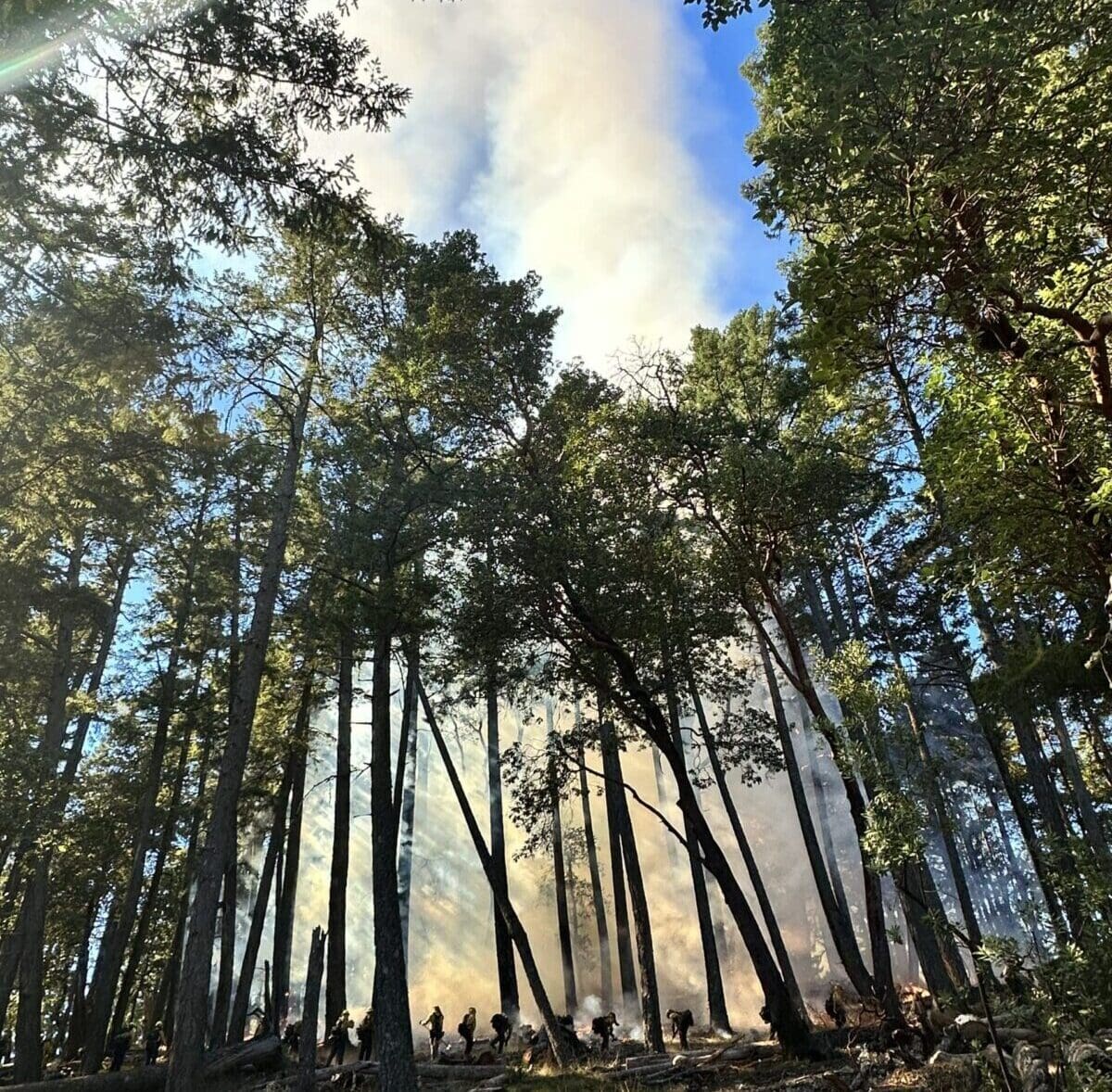
Not all smoke comes from wildfires. At times, fire professionals and land managers use prescribed burns (sometimes called controlled burns) as a tool to reduce fire fuels (excess vegetation) under carefully chosen conditions.
While these prescribed burns do produce smoke, it is usually significantly less than a wildfire and for a short period of time. They are planned with the goal of attaining long-term benefits by reducing excess fuels now, thereby lowering the intensity of future wildfires. Agencies work to schedule prescribed burns when weather, wind, and air quality forecasts suggest the least impact on nearby communities, and they provide public notice in advance whenever possible. These efforts are part of creating healthier forests and safer communities
Additional Resources
- Marin County Health & Human Services – Wildfire Air Quality Info
- U.S. Environmental Protection Agency (EPA) – Indoor Air Filtration Factsheet
- EPA’s Wildfire Smoke Public Health Concerns