Wildfire Prevention in Action
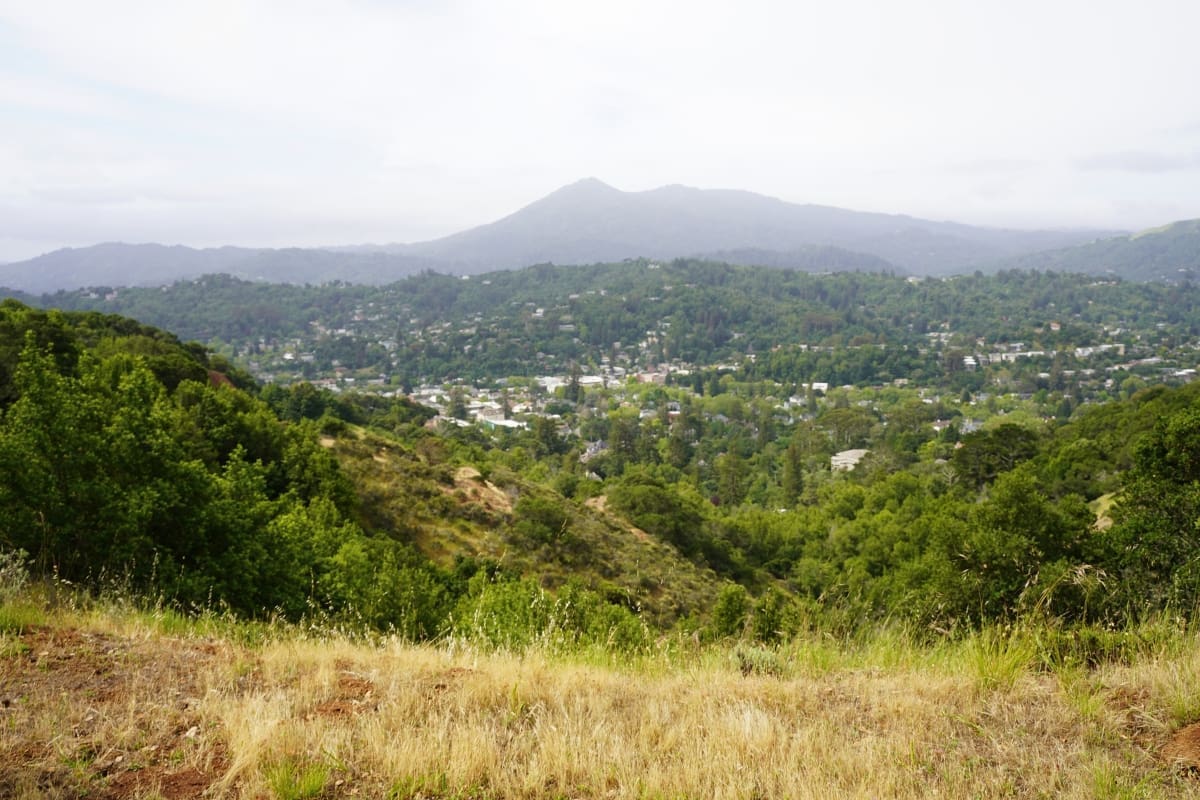
On April 24, 2026, Marin Wildfire, the Ecologically Sound Practices Partnership, and the San Rafael Fire Department hosted a field visit to San Rafael Hill, a steep and highly visible landscape where wildfire risk, community safety, and ecological stewardship come together.
The hillside is home to nearby residential neighborhoods, overlooks downtown San Rafael, sits adjacent to Highway 101, and supports critical infrastructure, including communication towers and water catchment systems. It is a place where the stakes are clear.
It is also a place with a history of fires. As Calvin Schrader, Wildfire Mitigation Specialist with the San Rafael Fire Department, shared with attendees, San Rafael Hill has experienced fire annually for the past five years.
Across roughly 80 acres, a coordinated, multi-layered wildfire mitigation effort is underway to reduce hazardous fuels, improve access, support safer evacuation, and protect nearby homes and infrastructure.
Improving Access for Firefighters and Residents
In steep, fire-prone areas like San Rafael Hill, access matters. Roads that are easier to navigate can help residents leave more safely and allow emergency responders to reach the area more effectively.
The project began with crews trimming vegetation along fire roads to reduce fuels, improve visibility, and make it easier for firefighters to move through the area during an emergency. Other improvements focused on residential roads, including roadside vegetation work and painted designated parking areas. These steps help keep roadways clearer and more visible, improving everyday safety while also supporting evacuation routes and firefighter access during a wildfire.
Reducing Fuels While Supporting Ecological Health
Vegetation management on San Rafael Hill is targeted and intentional. Invasive plants such as gorse and broom are being addressed through manual removal. At the same time, plants are being tracked through Calflora and monitored seasonally to assess native regrowth. This balance of reducing hazardous fuels while supporting ecological health is central to Measure C-funded wildfire prevention work across Marin.
The goal is not to clear the landscape entirely. It is to reduce the vegetation most likely to carry fire quickly while helping healthier, more fire-resilient plants return over time.
Prescribed Pile Burning Helps Treat Vegetation Onsite
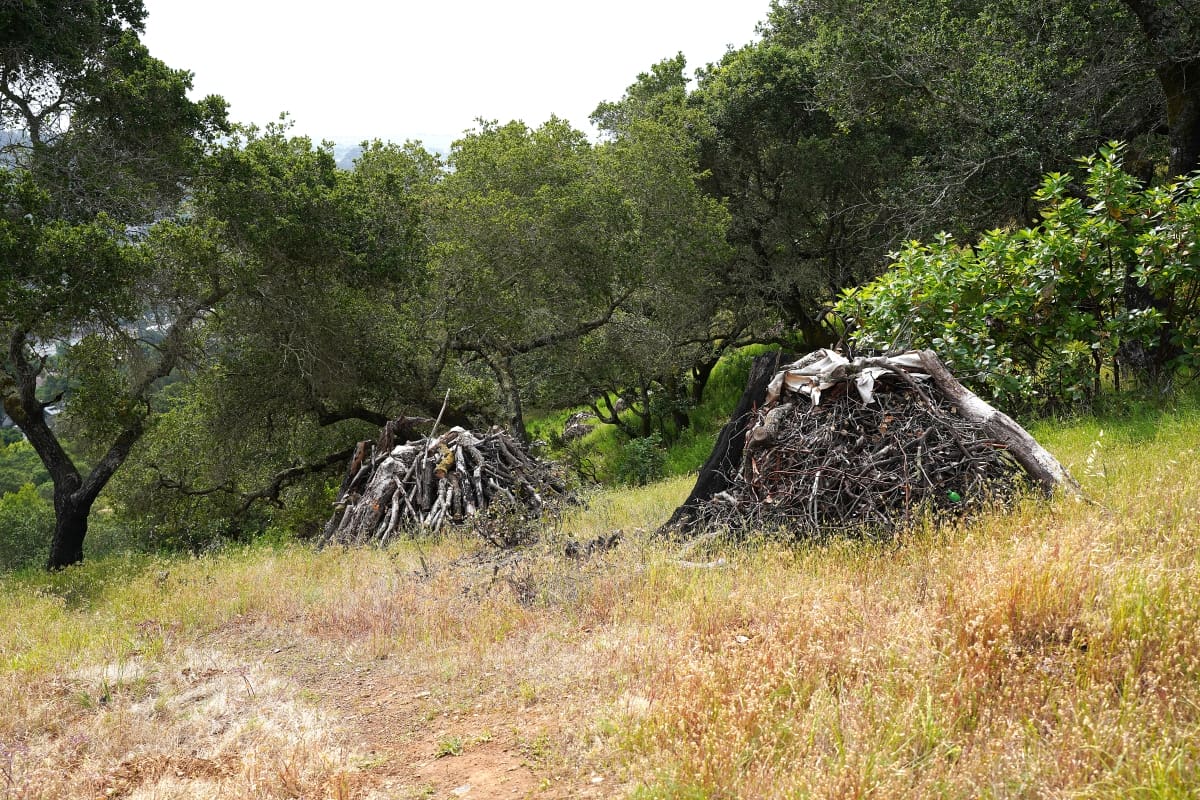
One week before the project field visit, the San Rafael Fire Department conducted a prescribed pile burn on the site. Crews safely treated approximately 80 piles of vegetation, equivalent to about 20 truckloads of debris.
Prescribed pile burning can be an efficient way to treat material onsite, reducing the need to haul vegetation away by truck. It can also help eliminate invasive seed banks, particularly French broom, while leaving behind nutrient-rich biochar that supports native plant recovery.
Because the burn was conducted under carefully managed conditions, smoke impacts were minimal. Zoe Hyland, Wildfire Mitigation Specialist with the San Rafael Fire Department, noted the exceptionally clean burn conditions. Nearby residents noted that the only signs of the work were posted notices, an AlertMarin notification, and a brief scent of burning vegetation.
About one-third of the piles on the site have been treated so far. Additional burning is planned for winter, when conditions are safer and more effective for this type of work.
Seeing the Results on the Ground
During the project field visit, attendees stood in a burn scar from 2021 and saw firsthand how proactive land management can reshape a landscape.
Clearing dense underbrush has reduced hazardous fuels, improved visibility across the bay and toward Mt. Tam, and made the area less attractive for illegal camping, which may have contributed to past ignitions.
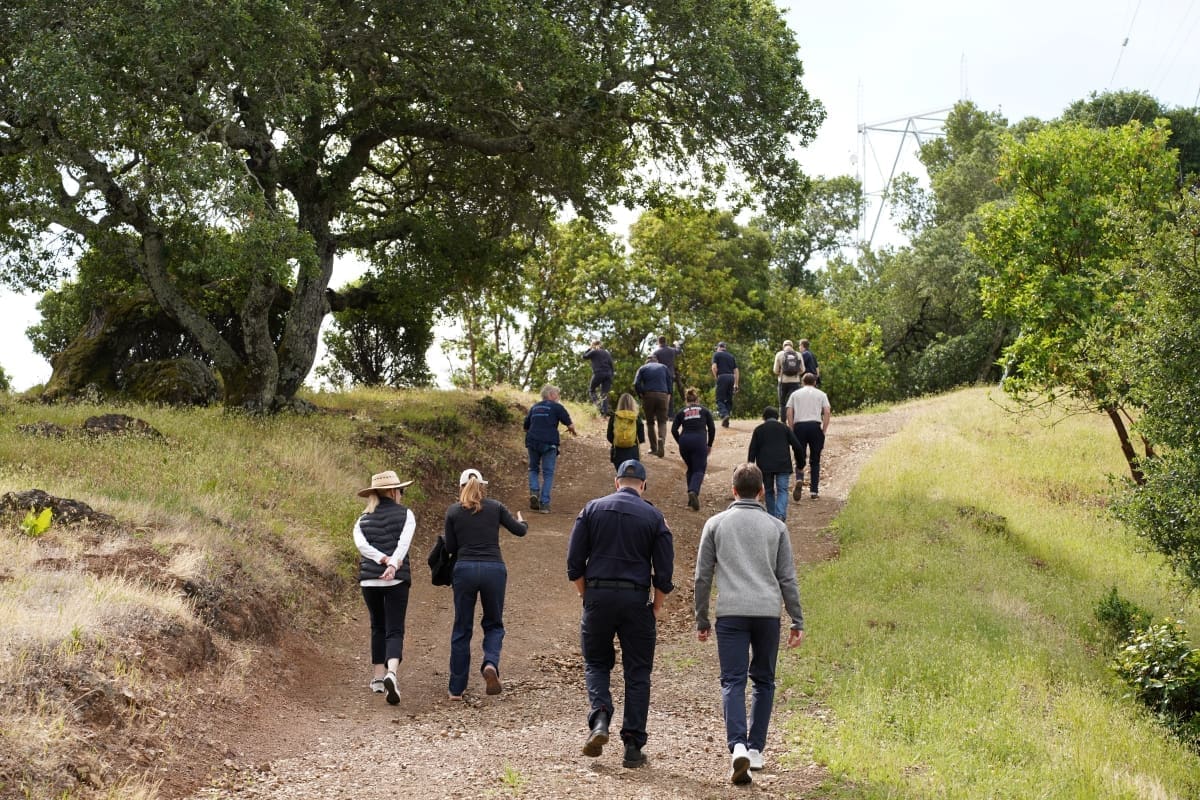
The visit brought together Marin Wildfire board members, agency staff, and engaged community members, including a Terra Linda resident interested in learning how similar actions could help protect their neighborhood and encourage more residents to participate in Firewise efforts.
A Shared Investment in Wildfire Resilience
Funded through Measure C, the San Rafael Hill Fuel Reduction Project reflects Marin’s broader commitment to reducing wildfire risk where it matters most: at the intersection of homes, infrastructure, evacuation routes, and fire-prone landscapes.
The project is one example of how coordinated wildfire prevention work can improve safety for residents, support firefighter access, protect critical infrastructure, and strengthen the resilience of Marin’s natural landscapes.
For more information on wildfire risk reduction in San Rafael, please visit the San Rafael Fire Department’s Prescribed Fire and Vegetation Management project webpages.