Mulch is an important part of landscaping. It helps retain moisture, suppress weeds, and prevent erosion. But in wildfire-prone areas, it is also important to think about how mulch can affect fire risk.
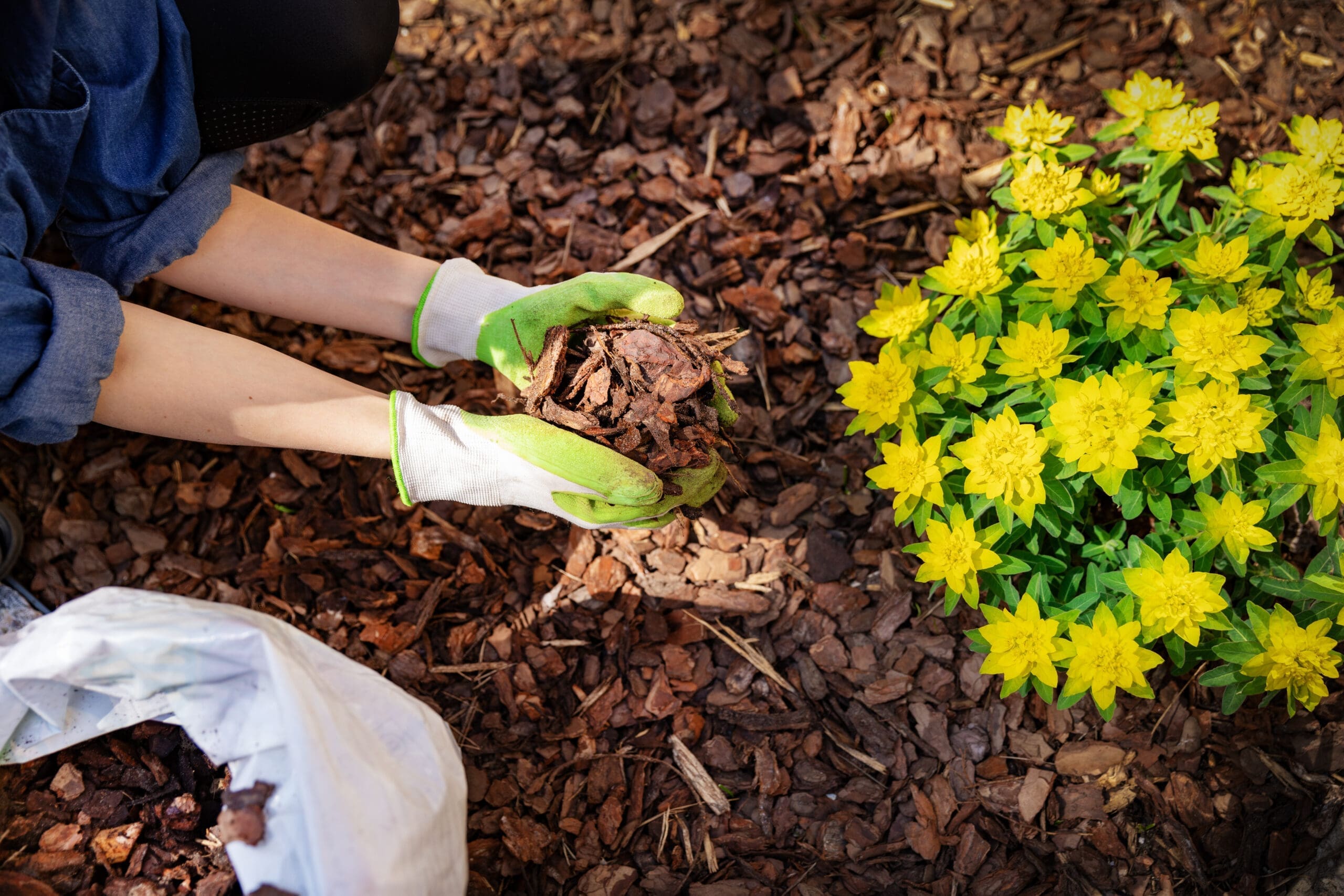
Mulch is generally grouped into two categories: inorganic and organic. Inorganic mulches, such as rocks and pebbles, are a non-combustible option. Organic mulch is made from plant material. Common organic mulch includes composted mulch, which contains woody material and may also have soil mixed in, as well as medium bark nuggets and wood chips.
All organic mulch is combustible, but some materials and sizes are more flammable than others. That is why it is important to choose the right mulch and use it in the right way within each Defensible Space Zone. In general, the best choice is composted wood mulch, bark chips, or bark mulch that is 1 to 1.5 inches in diameter.
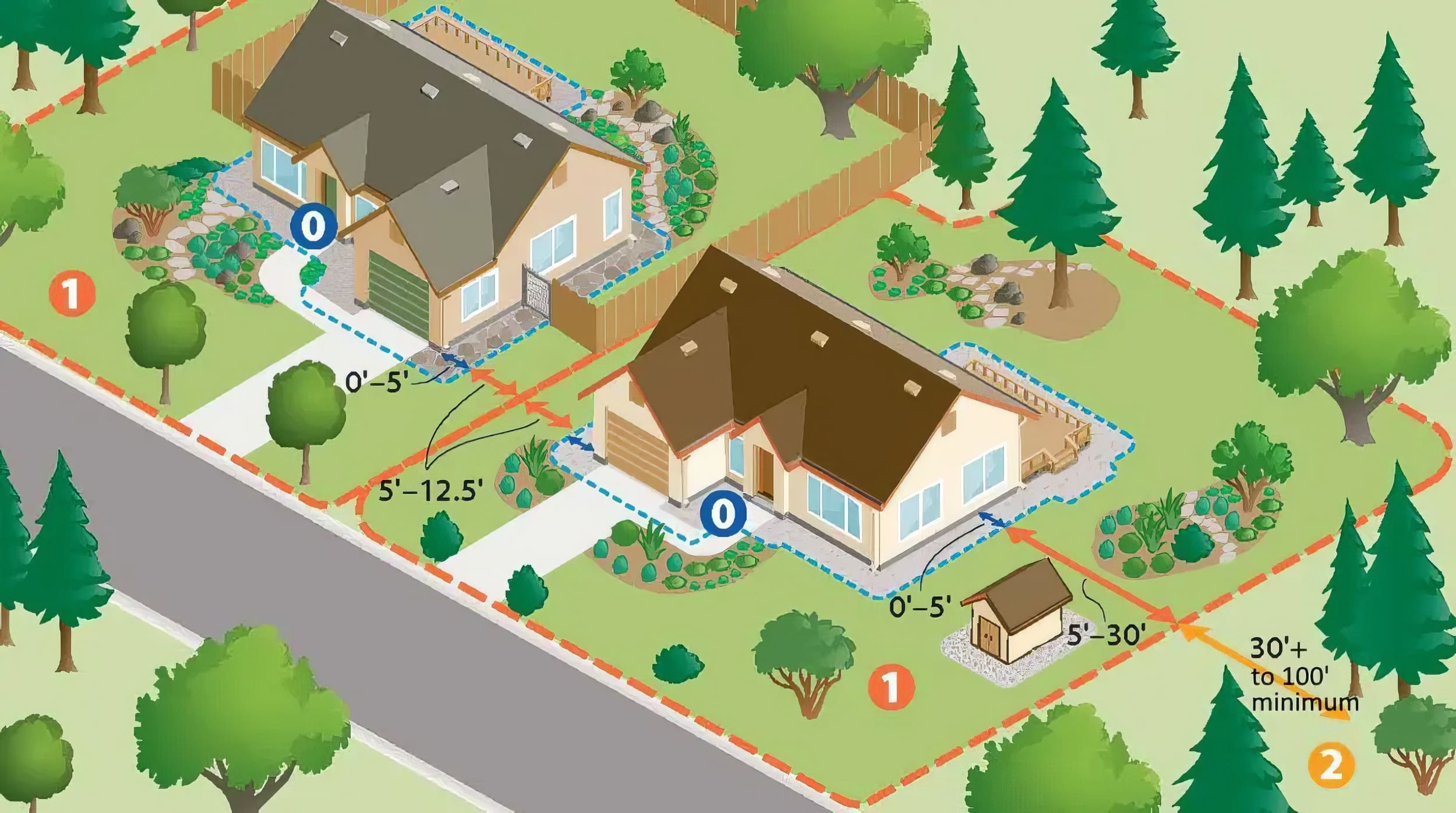
Zone 0: 0 to 5 Feet From Structures
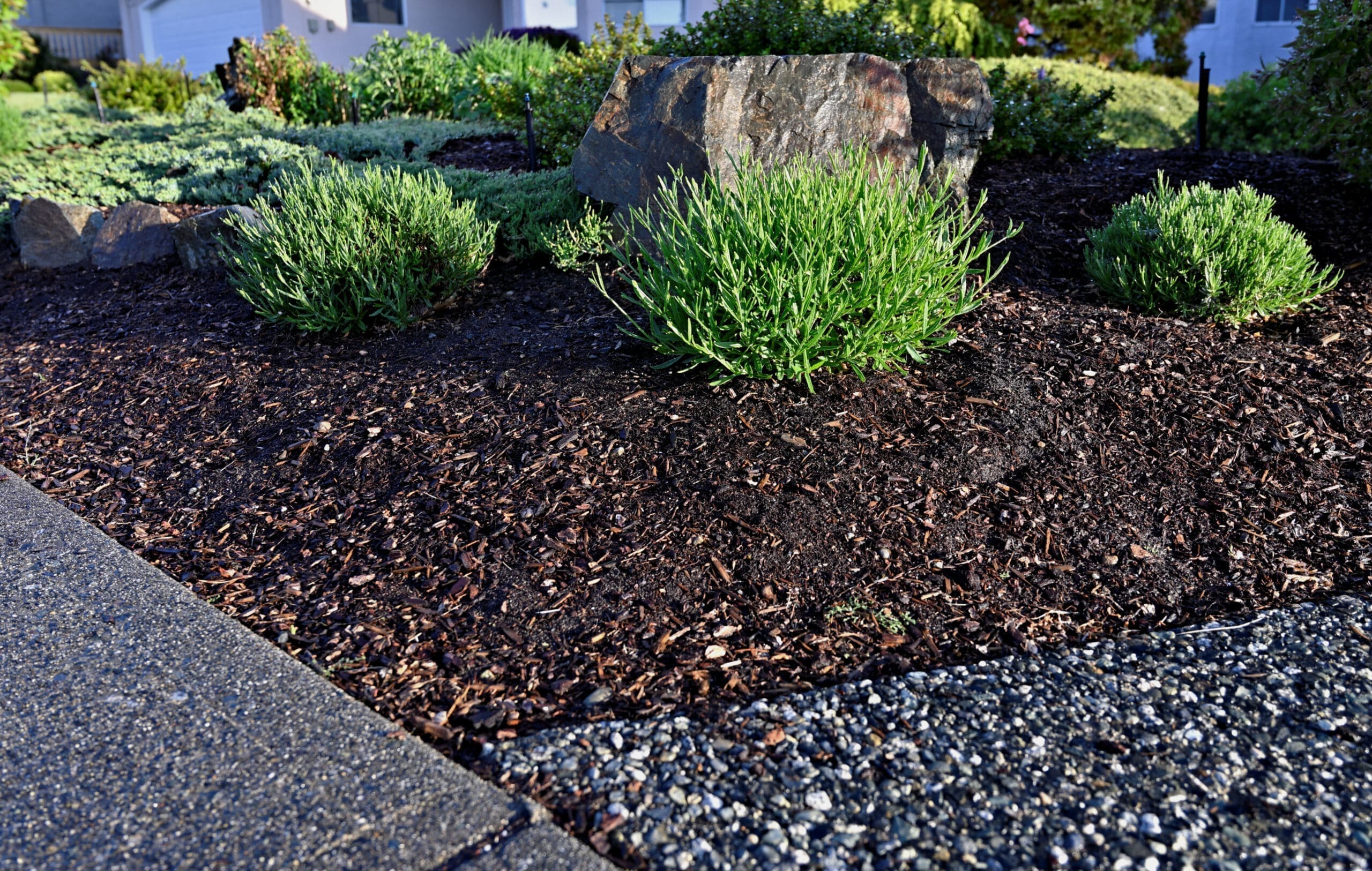
This is the most critical area around your house and wooden structures. In Zone 0, use only non-combustible mulch such as stone, gravel, and decomposed granite.
These materials help reduce the risk of ember ignition and offer added protection for your home. Also, you can use a weed barrier under rock mulch in this zone to help inhibit weed growth. Synthetic weed barrier is acceptable here, but it should not be exposed or touching combustible siding.
Zone 1: 5 to 30 Feet From Structures
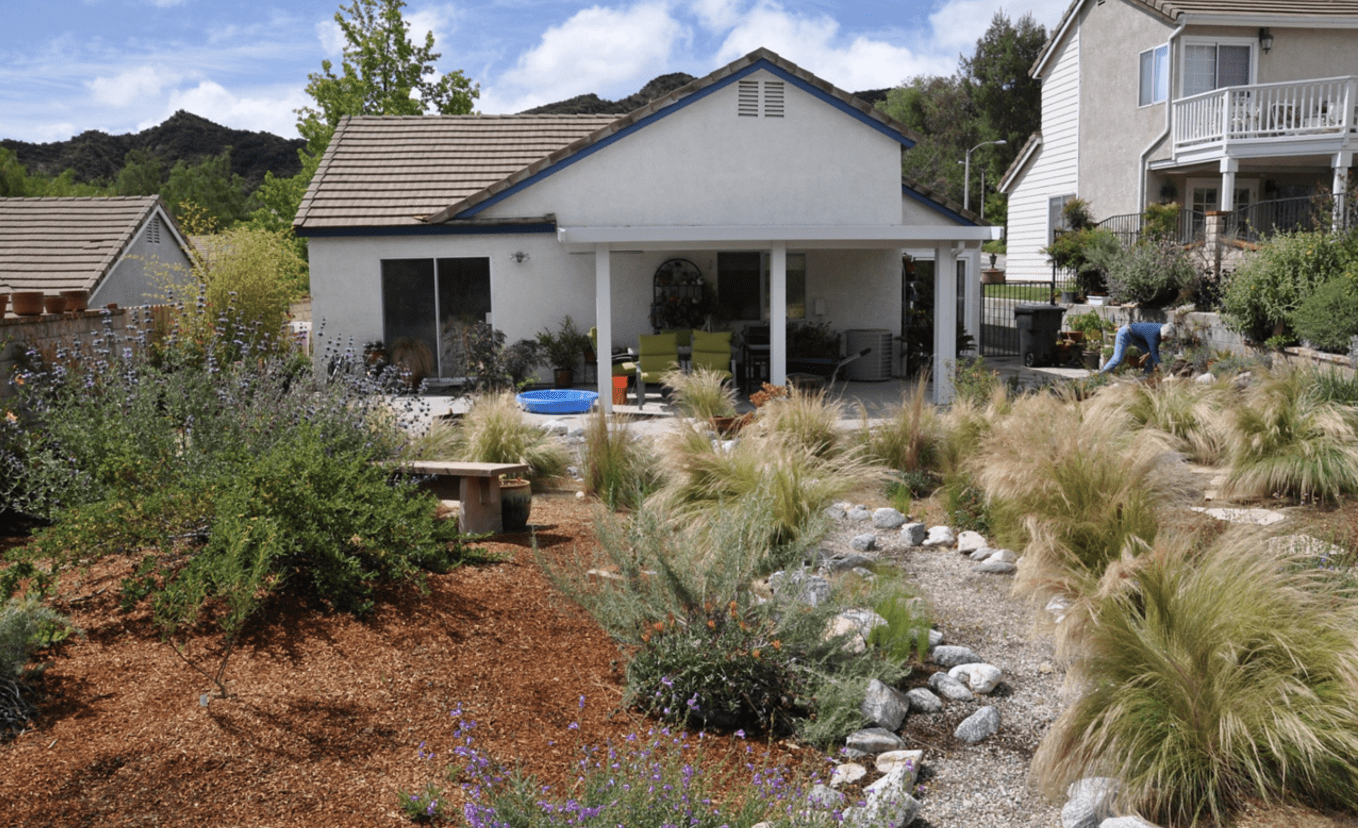
In Zone 1, composted wood chips or medium bark mulch can work well, but they should be used carefully. Keeping mulch away from trunks is also better for the health of the tree.
Synthetic weed barrier is not recommended beyond 5 feet from the home because it can inhibit water infiltration.
Key guidelines:
- Keep combustible mulch depth to 3 inches or less
- Use combustible mulch in plant groupings separated by non-combustible mulch, hardscaping pathways, or dry creek bed features
- Keep mulch away from the trunk of larger bushes and trees, since burning mulch can kill exposed roots and bark
Zone 2: 30 to 100 Feet From Structures
In Zone 2, in addition to the guidelines for in Zone 1, these points are important to follow:
- Keep combustible mulch depth to 3 inches or less
- Separate mulch areas with non-combustible mulch or hardscape features
- Keep mulch away from the trunks of larger bushes and trees
- Pine needles up to 3 inches are acceptable
Materials to Avoid
There are some mulch materials that are much more hazardous and should be avoided entirely. These materials ignite easily and burn faster than wood chips. The most hazardous mulches are:
- Shredded western red cedar (“gorilla hair”)
- Shredded or ground rubber
- Fire-retardant-treated mulches are also not a better option. They have a limited effective life and have shown to be no less flammable than untreated mulch.
The Takeaway
Mulch can still be part of a healthy, attractive landscape, but in wildfire-prone areas, placement and material choice matter. Use non-combustible mulch in Zone 0, and use organic mulch carefully and correctly in Zones 1 and 2. Choosing the right material and applying it in the right way can help decrease fire risk while still supporting the landscaping benefits mulch provides.