Understanding Fire Weather Improves Community Wildfire Protection Planning
On a hot, dry afternoon in Marin, the difference between a small fire in the hills and a neighborhood-wide disaster often comes down to the wind. When strong winds sweep across the county, they dry out plants, carry embers far, and push flames faster than firefighters can stop them.
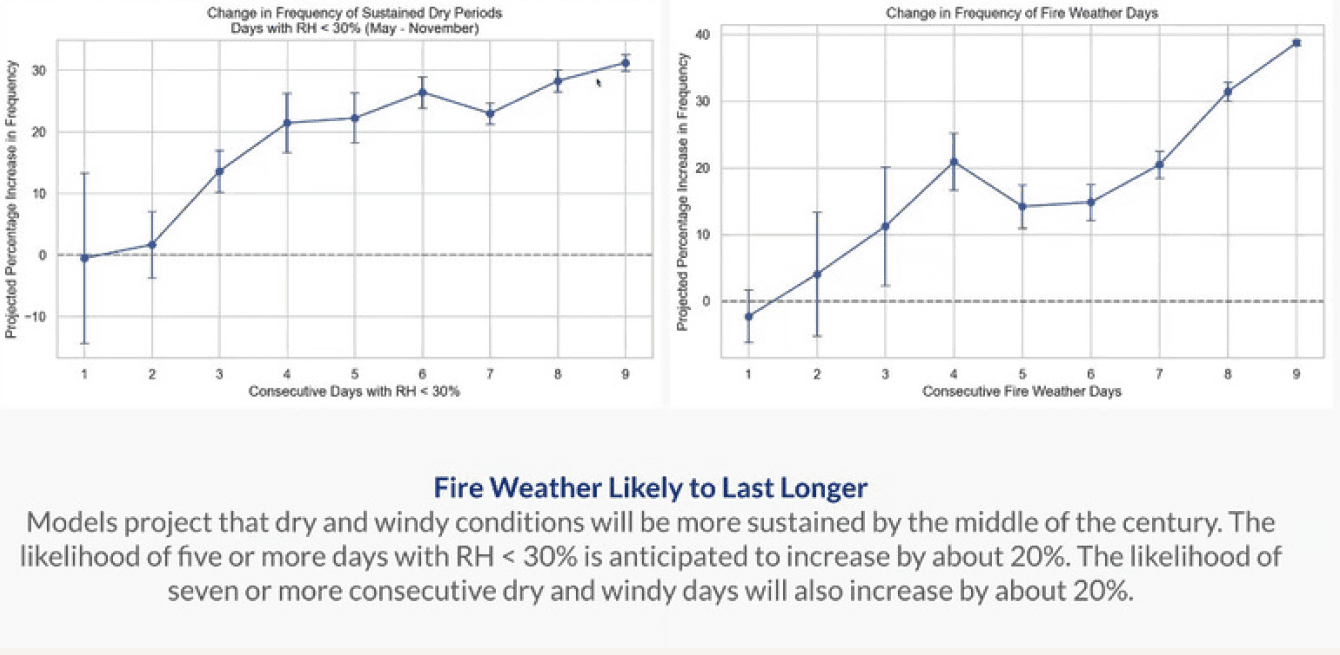
The 2025 Los Angeles fires and the 2023 Lahaina fire showed how changing weather patterns can make urban fires much worse. As part of the Community Wildfire Protection Plan (CWPP) update, Marin Wildfire Prevention Authority studied past weather records, satellite data, and climate change predictions. The goal was to see if there are weather factors missing that could cause more dangerous fires in the next ten years.
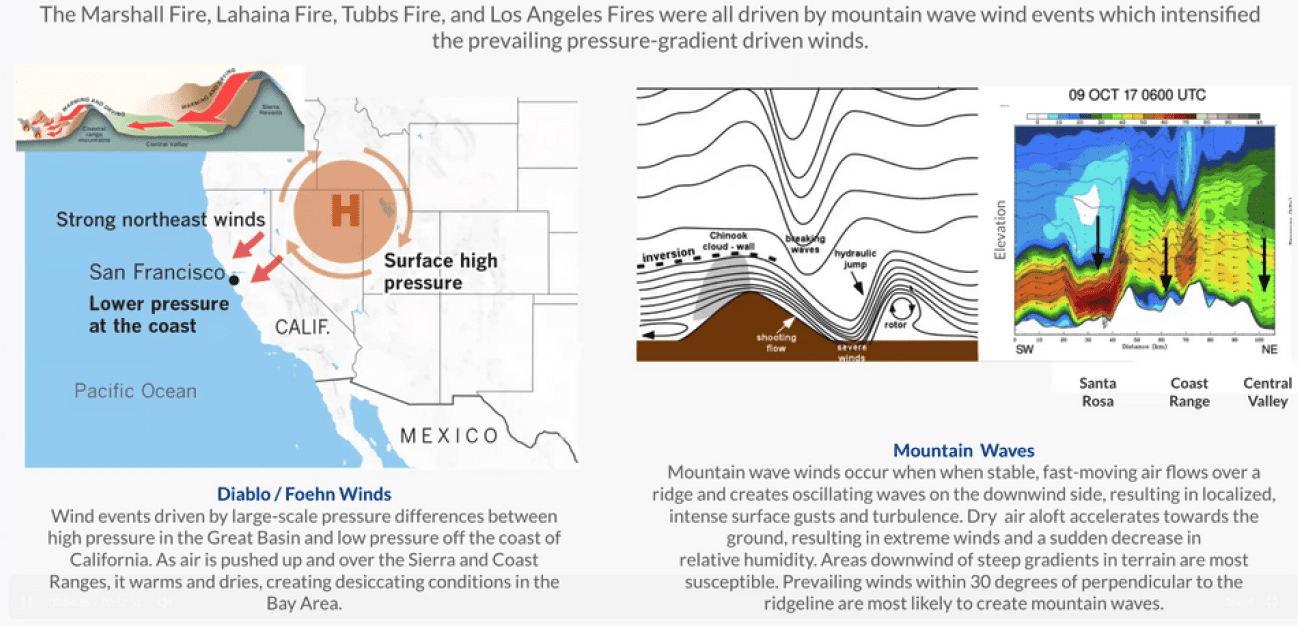 From this study, the current Diablo Wind measurements will remain since they match what is seen today and what climate change models predict. A new model will also be added that looks at west-blowing winds with very dry vegetation and stronger wind speeds. These kinds of conditions have already been seen in Marin and are expected to happen more often in the future. Marin faces its own version of these threats. Two winds in particular — Diablo winds and West winds — are the most dangerous to our communities.
Marin’s Most Dangerous Wind Patterns
Diablo Winds
- Strong winds that blow from the northeast towards the coast
- Hot, very dry, and often very fast
- Usually occur in the fall and winter
- Have fueled some of the most destructive fires in the Bay Area
West Winds
- Blow in from the ocean, but arrive unusually dry instead of cool and foggy
- Less frequent than Diablo winds
- Can spread flames quickly and shift the fire in dangerous and surprising ways
Key Takeaways for Marin Residents
Diablo winds create extreme fire danger almost every year. They often come in late fall, when the landscape is already very dry and vegetation is ready to burn. They are similar to the winds that fueled the major fires in Los Angeles earlier this year. When they blow, fires in Marin can grow quickly and put whole neighborhoods at risk.
Winds from the west are also a risk. In Marin, ocean breezes usually bring cool air and coastal fog. But in rare cases, instead of fog, these winds can be dry and very powerful, fueling dangerous fire spread. These conditions can drive fires in new directions and catch firefighters off guard.
Other winds in Marin can spread fire too, but they are usually weaker and carry more moisture than Diablo or West winds. These fires will still burn, but won’t move as fast or as fiercely. By preparing for the strongest winds, we are also ready for smaller events.
 What Marin Residents Can Do
- Sign up for Alert Marin
- Respond to Red Flag Days by preparing the home and yard
- Make an evacuation plan
- Learn how to evacuate safely downhill
- Assemble a go-kit
Together We Are Ready
Fire departments in Marin plan and prepare for the toughest fire weather the county faces. Communities built to handle those conditions will also be resilient to less severe fires. By preparing for these winds, Marin is planning for the moments when wildfire risk is highest. If we are ready for the toughest days, our neighborhoods will be safer the rest of the year, too.
Questions or comments can be send to the Community Wildfire Protection Plan team.
Funding for Fire Safe Marin’s participation in the CWPP project was provided by a grant from the California Department of Forestry and Fire Protection as part of the California Climate Investments Program, through the California Fire Safe Council.
Funding for the Community Wildfire Protection Plan (CWPP) Update Project comes from Measure C funds through Marin Wildfire.