Goats Grazing on the Fireline
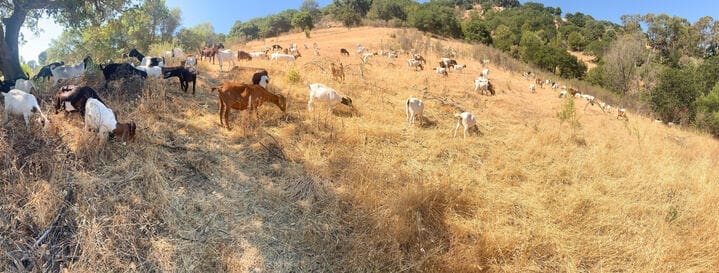
Every summer across Marin, herds of goats and sheep move steadily across hillsides, open space, and the edges of neighborhoods. Their job is simple: eat! But the impact of their natural instinct can be significant.
As wildfire seasons become longer, hotter, and more destructive, land managers, fire agencies, and property owners are using targeted grazing as one tool to reduce the vegetation that can fuel wildfire. When carefully planned and properly managed, goat grazing can help slow fire spread, reduce fire intensity, and make landscapes easier for firefighters and communities to defend.
Too Much Fuel, Too Close to Homes
Wildfire behavior is shaped by three major factors: fuel, weather, and topography. We cannot control wind, heat, or steep terrain. But we can influence fuel: what can burn, how much of it there is, and how it is arranged across the landscape.
In California’s Mediterranean climate, wet winters often produce abundant grasses and vegetation that dry out during the summer. When left unmanaged, this growth can create continuous fuel beds that allow fire to move quickly, especially during hot, dry, and windy conditions.
Reducing fine fuels such as grasses, weeds, and small shrubs can help slow fire spread and reduce flame lengths. That is where grazing can play an important role.
But Why Goats?
Goats are well suited for vegetation management in places where other tools may be difficult to use. Unlike mechanical equipment, goats can:
- Navigate steep slopes and narrow canyons
- Eat a wide range of vegetation, including grasses, brush, and some invasive plants
- Reach areas that may be difficult, dangerous, or expensive to treat by hand or machine
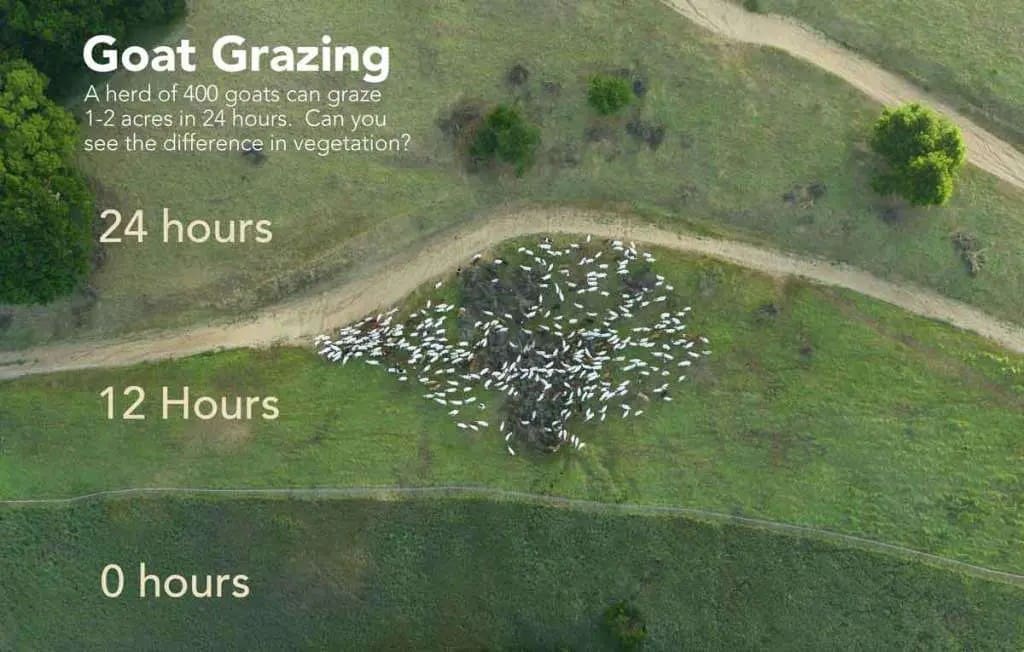
As goats graze, they reduce flammable vegetation and break up continuous fuel beds, helping disrupt how fire moves across hillsides and open space. Todd Lando, Battalion Chief with Central Marin Fire and Board President of Fire Safe Marin, calls targeted grazing “one of the most effective and environmentally sensitive tools available for vegetation management” because it mimics natural processes and can help create conditions less likely to support extreme fire behavior.
More Than Fuel Reduction
Grazing does more than remove vegetation. It also helps recycle it.
As goats consume grasses, weeds, and shrubs, they convert that material into manure, returning nutrients to the soil. Over time, well-managed grazing can support nutrient cycling, soil health, and landscape resilience.
Healthy soils are also part of the broader carbon cycle. As vegetation regrows after grazing, plants pull carbon dioxide from the atmosphere through photosynthesis and transfer some of that carbon into the soil through their roots. In well-managed systems, this process can help support productive, resilient landscapes.
Fire is also part of the natural carbon cycle, releasing carbon during combustion while regrowth and healthy soils help reabsorb it over time. The goal of vegetation management is not to remove all plants, but to manage them in ways that reduce risk while supporting healthier landscapes.
From Rangelands to Neighborhood Edges
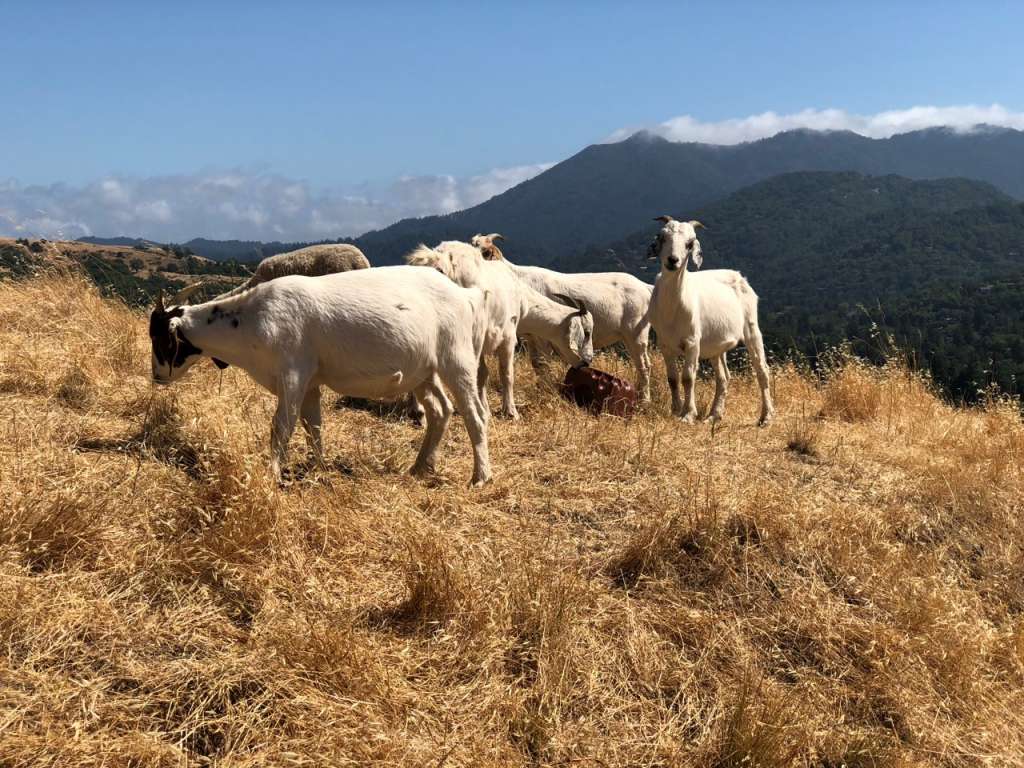
Grazing has long been used on California rangelands (expansive, natural ecosystems such as grasslands, shrublands, and woodlands suitable for grazing by livestock), but its role has expanded into the wildland-urban interface (WUI) where homes and communities meet open space. Today, grazing crews work in many high-priority areas, including:
- Behind neighborhoods and along fence lines
- Around schools, parks, and critical infrastructure
- Along evacuation routes, access roads, and fuel breaks
- On steep or hard-to-reach hillsides
In these areas, reducing vegetation is not only about land stewardship, it is also about public safety. Goats are a perfect fit for that concern.
In Marin and across the Bay Area, grazing projects are often carefully targeted. Crews design grazing areas based on terrain, vegetation type, access, timing, and wildfire risk. Some projects may cover a small parcel, while others may span hundreds of acres.
Living with Wildfire
As California adapts to the changing climate and ecosystems, the question is not whether fire will occur, but how well we prepare for it and live with it.
Sometimes that preparation looks like clearing gutters, creating defensible space, or installing ember-resistant vents. And sometimes, it looks like a herd of goats moving across a hillside, quietly reducing risk one bite at a time.
Targeted grazing is not a replacement for home hardening, fire smart landscaping, or larger landscape-scale wildfire prevention work. But when used in the right place, at the right time, and as part of a coordinated strategy, it can be a practical and environmentally sensitive way to reduce wildfire fuel.

Interested in Grazing for Your Property?
Targeted grazing is often most effective on larger parcels, steep terrain, or areas with dense, continuous vegetation that are difficult to manage by hand or machine.
If you are interested in whether grazing may be a good fit for your property, services such as Match.Graze can help connect landowners with experienced grazing providers. These platforms allow you to share details about your site and receive guidance on feasibility, timing, scale, and cost.