Who is Dr. Steve Quarles?
If you’ve spent time exploring Fire Safe Marin’s educational materials, you’ve likely heard us reference the Insurance Institute for Business & Home Safety, or IBHS, a leading source of research on how homes perform in wildfires and other wind-driven natural hazards. In Marin, we’re fortunate to have a direct connection to that work through Mill Valley resident Dr. Steve Quarles.
Focused on the Work
Wildfire prevention in Marin is supported by some of the most knowledgeable voices in the field. Among them is Steve, someone who has not only contributed to the conversation, but helped build the foundation for how homes are designed, tested, and constructed in fire-prone environments.
In many ways Steve is how you’d imagine a scientist: detail-oriented, calm, curious, and deeply observant. But for Steve, what stands out is his humility. Despite a career that has helped shape building codes, testing standards, and wildfire research nationwide, he consistently redirects attention away from himself and back to the work.
From Wood Science to Wildfire Research
Steve earned his bachelor’s degree in wood science from Virginia Tech, followed by both his master’s degree and PhD in wood science from the University of Minnesota. After completing his PhD, he joined the faculty at the University of California, Berkeley, where his early research focused on the physical properties of wood and how construction details affect building performance.That expertise in materials and building systems later became essential to his wildfire work, where understanding heat exposure, ignition pathways, and structural vulnerabilities is key to reducing home risk.
During his years at UC Berkeley, Steve shifted from classroom teaching to applied research at the university’s Richmond Field Station, where he helped industry and public agencies understand why wood products and building systems were failing in the field.
In the late 1990s, FEMA-funded projects expanded that work into wildfire. His team was tasked with developing standardized ways to test how siding, decking, roofing, and windows perform under wildfire exposure. Those protocols were later adopted as State Fire Marshal standard test methods, incorporated into California’s Chapter 7A building code, and adopted as ASTM standard test methods now widely used to evaluate the wildfire performance of building materials.
Building the Standards for Safer Homes
The shift from studying individual materials to understanding how entire building systems behave in fire helped define the next phase of Steve’s career.
Steve wasn’t drawn to wildfire out of lifelong fascination. He was drawn to it because it presented a complex and meaningful problem, one that required looking beyond individual components to understand how materials, design, vegetation, weather, and human behavior interact. That systems-based thinking remains central to his work today: wildfire risk is not driven by a single factor, but by the relationships between many conditions and decisions.
Testing How Homes Really Burn
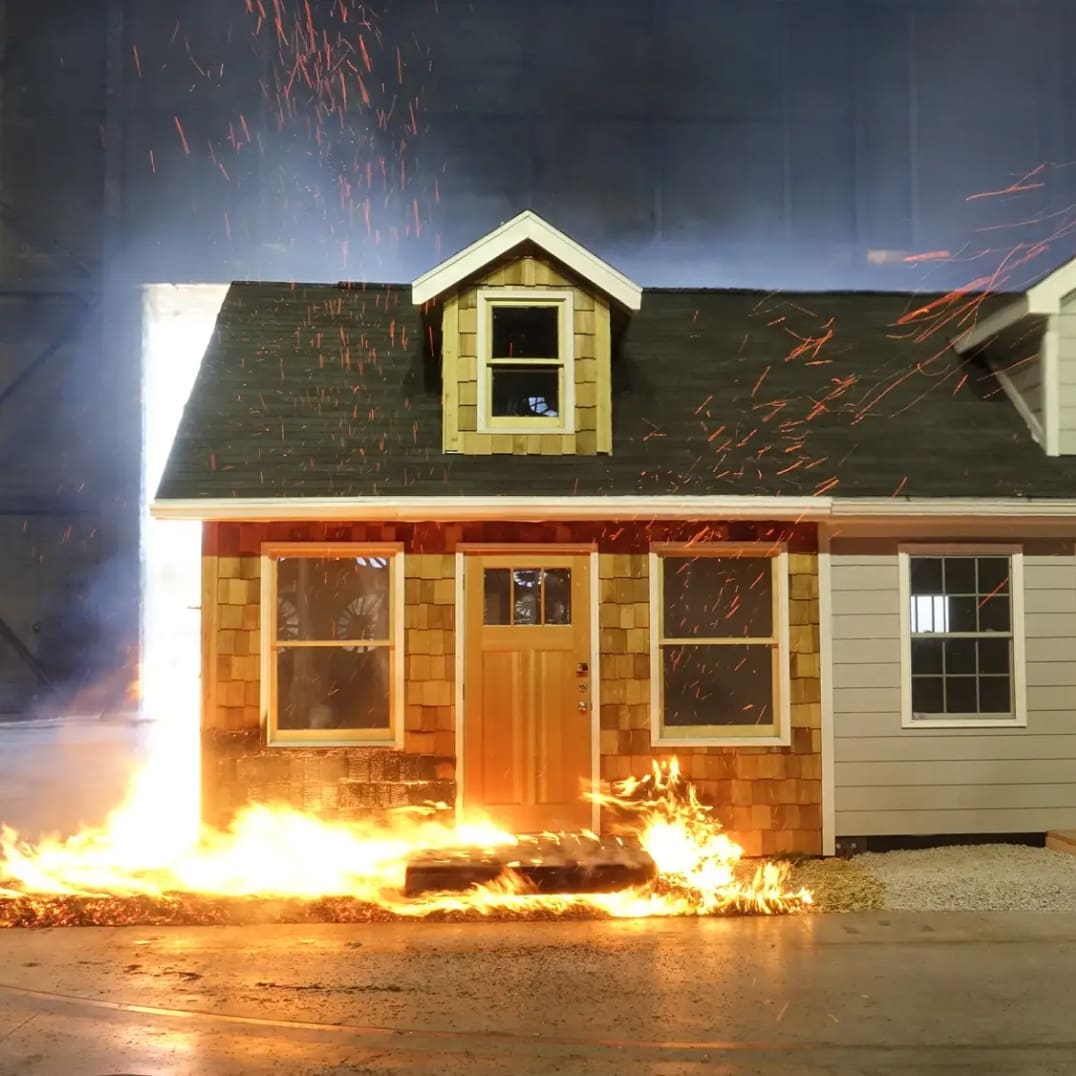
During the mid-2000s, while still with UC Cooperative Extension, Steve was invited to consult for IBHS after presenting at a State Fire Marshal workshop in San Diego County. IBHS was developing its new research center, a large-scale laboratory focused on wind-driven natural hazards, and needed expertise in wildfire and materials performance. As a consultant, Steve helped develop the ember generator that would become a signature part of IBHS wildfire experiments.
In 2011, after a decade with UC Cooperative Extension, Steve retired from the university and joined IBHS full time. There, he helped launch and shape the lab’s wildfire research program. As the lab’s fire and durability specialist, he designed full-scale experiments to study ember behavior and ignition pathways, often observing them from inside the test environment itself.
“I really enjoyed being in the testing chamber,” recalls Steve. “It was a safe place to experience fire and you learn a lot when you’re in the front seat.”
Turning Research Into Action
But just as important as the research is how he shares it.
During his time as a UC Cooperative Extension advisor from 2001 to 2011, Steve helped translate Chapter 7A into practice by developing curriculum, handbooks, and trainings for building officials, fire agencies, architects, contractors, and manufacturers across California. He delivered those trainings dozens of times statewide, helping turn building code requirements into guidance people could understand and apply.
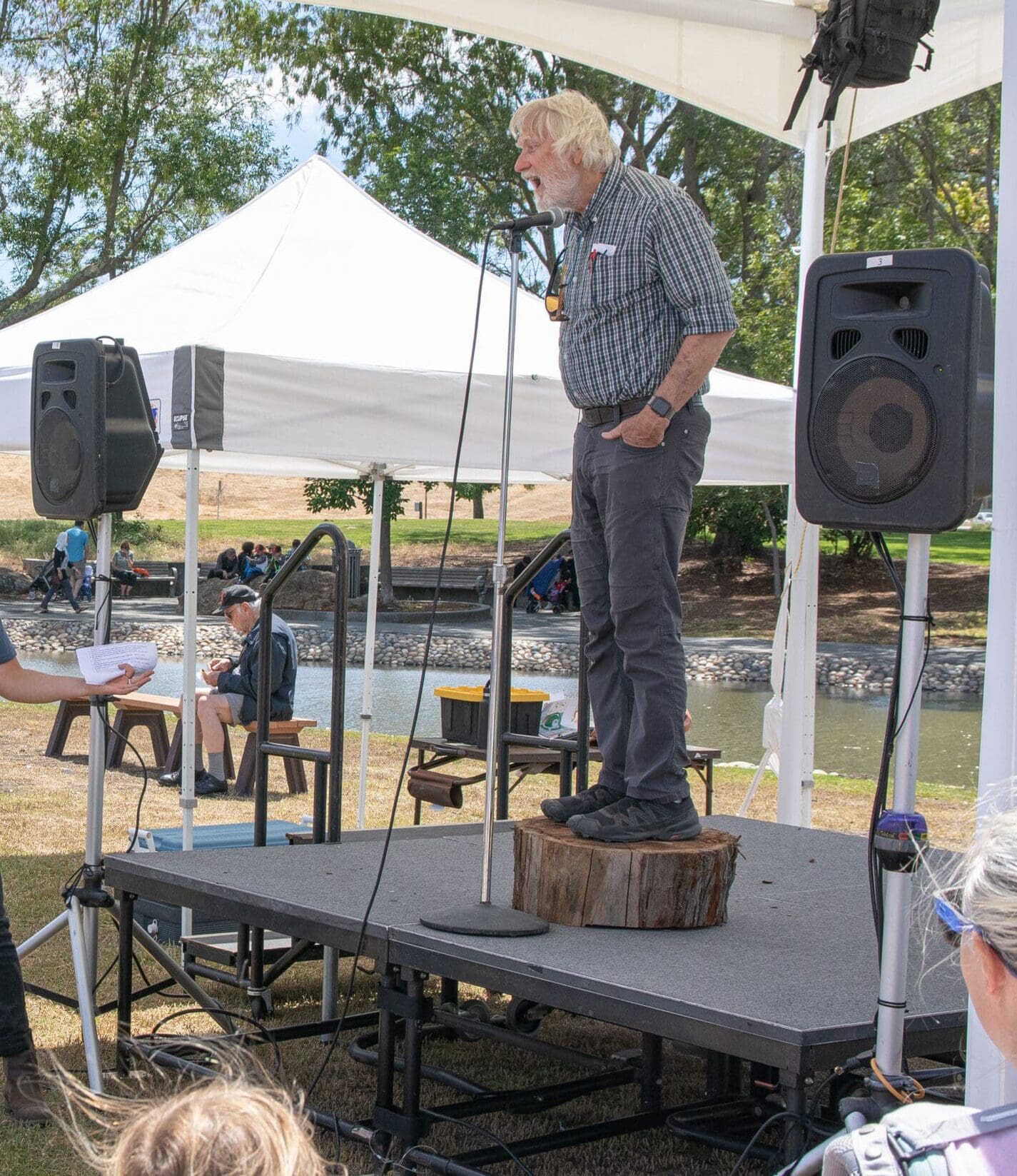
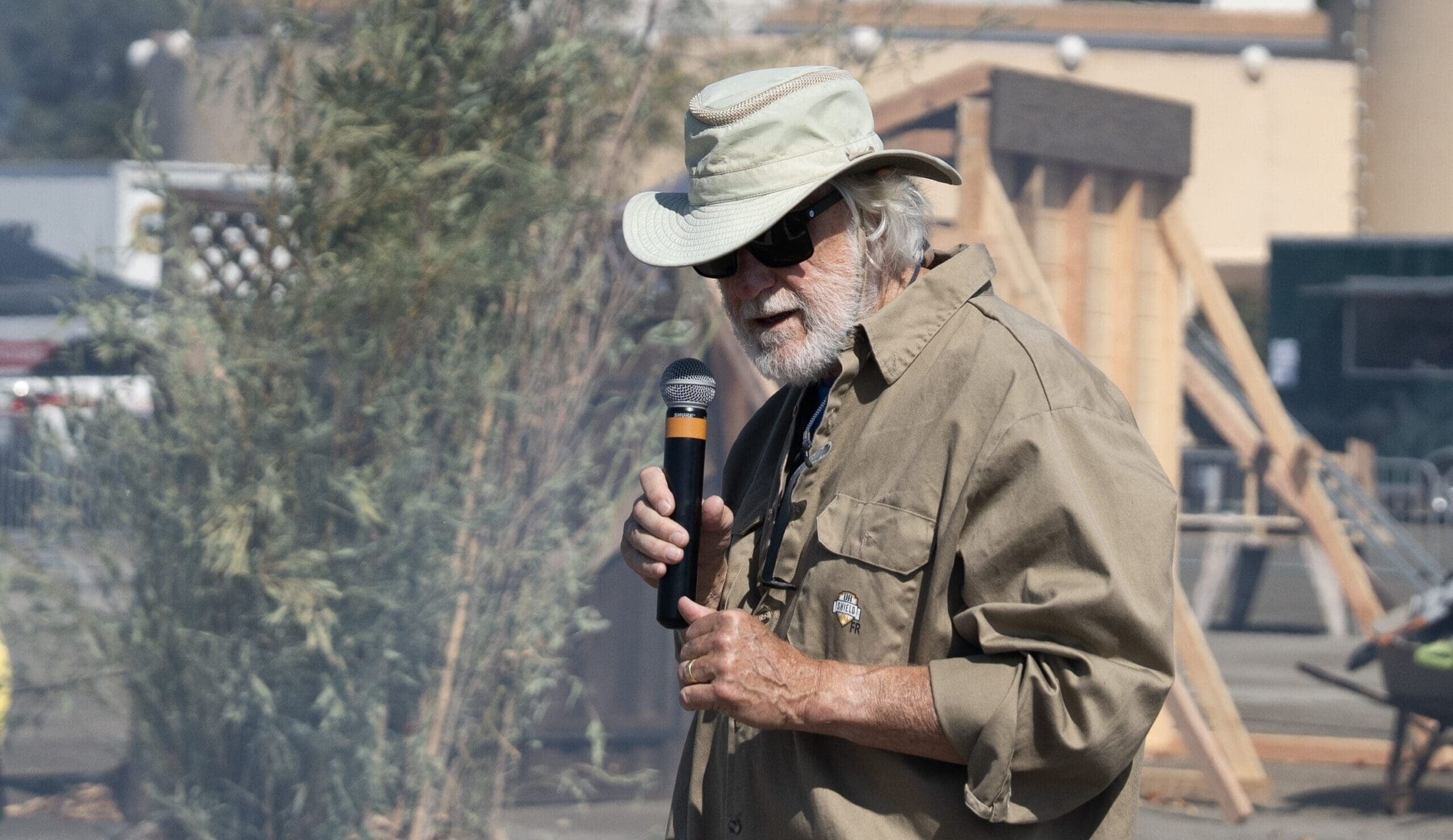
He also led public-facing workshops that brought wildfire science directly to communities through presentations paired with live fire demonstrations. That practical, accessible approach to education continues to shape his work today and is reflected in community events like Ember Stomp.
Even in retirement, Steve remains deeply engaged. He continues to collaborate with UC Extension colleagues, volunteers extensively with Fire Safe Marin as both a Community Ambassador and newly appointed Vice President of the Board, supports contractor trainings, and serves as the Firewise coordinator for his neighborhood.
For Steve, the motivation has always been curiosity and service. He enjoys being in the middle of a problem, figuring out how it works, and helping others make informed decisions in a space that can often feel complicated and overwhelming.
Wildfire risk in Marin is both immediate and complex, and we’re grateful that Steve continues to provide his clarity and guidance to our community through Fire Safe Marin.