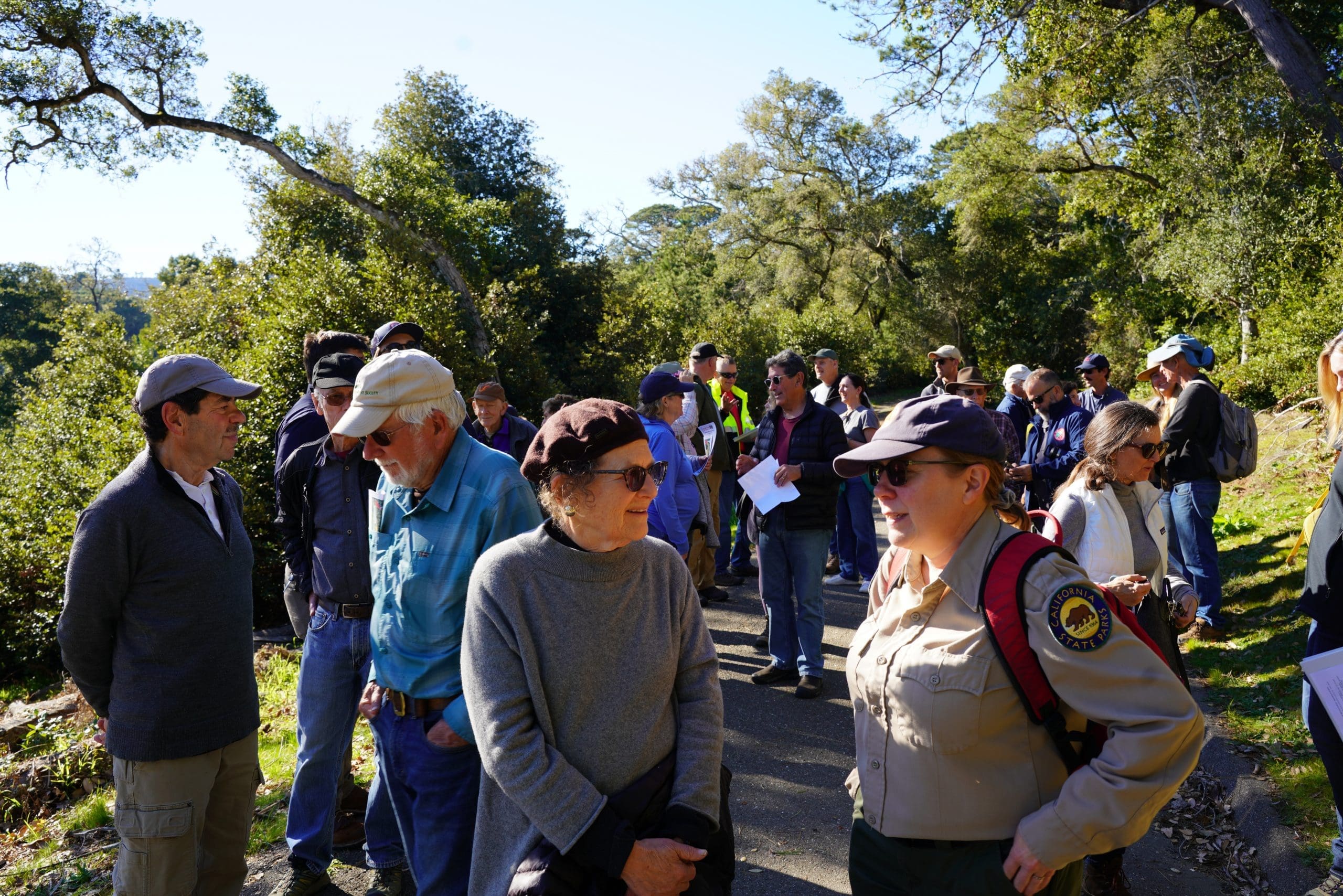
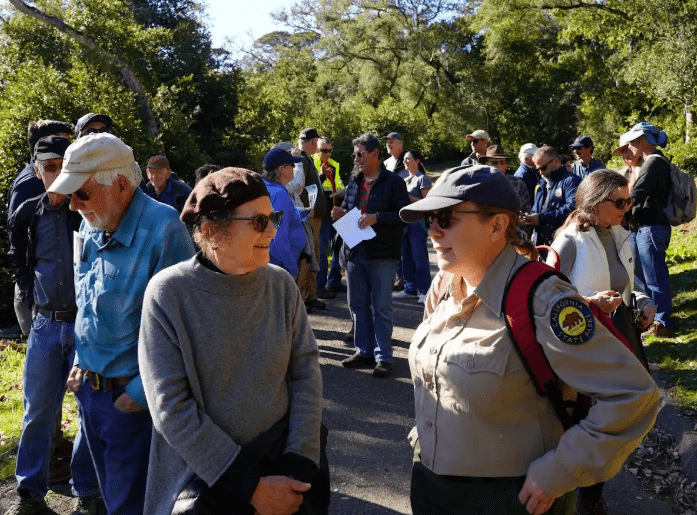
On a stunning January day along Tomales Bay, neighbors, agency partners, and wildfire professionals gathered for a public field trip highlighting progress on the Coastal Fuel Reduction Network Project. With clear skies and calm water as the backdrop, the day felt like a celebration, not just of the landscape, but of the collective effort underway to protect it.
This work is possible thanks to a wildfire state of emergency declared on March 1, 2025 by Governor Gavin Newsom, which temporarily suspended certain state requirements and allowed high-priority wildfire resilience projects to move forward in high-risk coastal areas. Even with the urgency and necessity of this work, environmental sensitivity remains at the core of every project. Biologists conduct pre-work surveys, crews receive biological training, and archaeologists are included where appropriate.
 “Environmental compliance is a promise to taxpayers and residents,” said Marin Wildfire’s Mark Brown. “We strive to ensure that this work is done thoughtfully, causing far less impact than an uncontrolled wildfire would.”
A key feature of this project is that much of the work is taking place on private property along shared evacuation routes. Progress depends on neighbor participation, and gaining permission to enter private land can be complex. The 2025 wildfires in Southern California helped initiate important conversations about shared vulnerability. Because project boundaries crossed property lines, including adjacent State Parks, addressing it requires collective responsibility. With that understanding, neighbors across the project area chose to participate, allowing this essential work to move forward.
Work on private land comes with care and collaboration. Before work begins, landowners can walk the site with project staff to identify and protect valued or sentimental plants. This approach balances fuel reduction with respect for personal connections to the land.
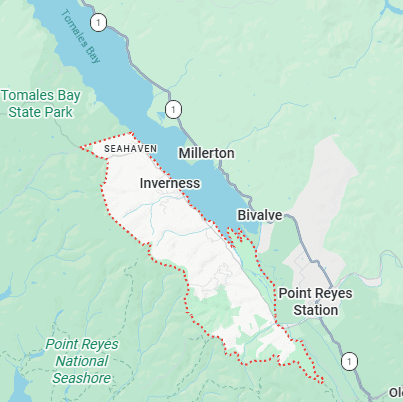
At the Seahaven site in Inverness, attendees saw how approximately 18 acres are being treated using hand crews only. Vegetation is hand-removed, hand-stacked, and hauled off site, with no herbicides used. These treatments reduce wildfire rate of spread and intensity while improving firefighter access and supporting a safer evacuation route for the community.
The crowd reflected the heart of Inverness: longtime and newer residents, CERT volunteers, volunteer firefighters, wildlife advocates, and locals with deep roots in conservation. Many also recognized the role of complementary tools, including the Chipper Day program, which supports residents in removing vegetation throughout their neighborhoods.
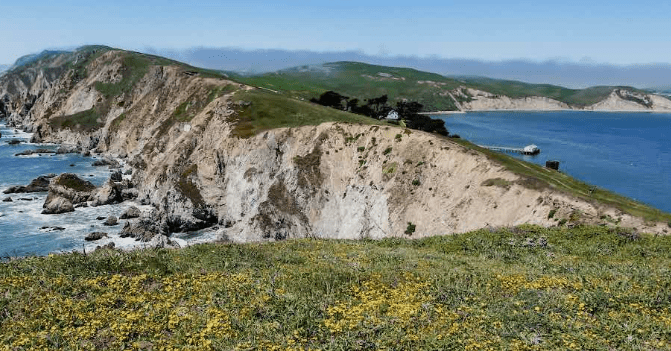
Against the backdrop of Tomales Bay, the day underscored a clear win, demonstrating how proactive, community-driven fuel reduction can strengthen wildfire resilience while honoring the ecological and social values that define West Marin.