
MARIN VOICE article from the Marin Independent Journal, July 2026:
“Wildfire survival improved by getting in car and leaving early” by Central Marin Fire Department Battalion Chief Todd Lando
Marin Voice article authored by Todd Lando, who is a battalion chief and wildfire hazard mitigation specialist with Central Marin Fire Department and president of Fire Safe Marin.
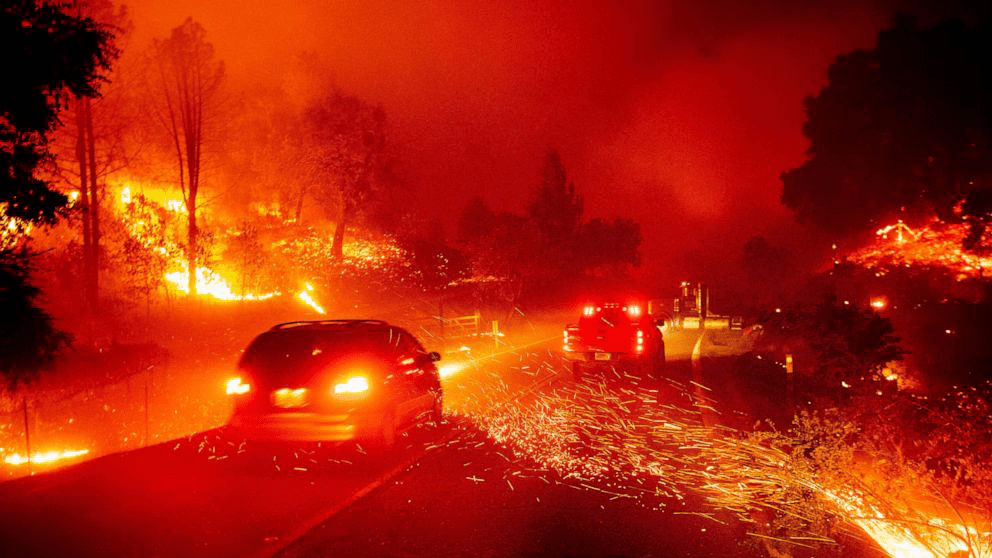
Ask people in Marin what scares them most about wildfire, and a striking number do not say the flames. They say the traffic. They picture themselves trapped in a line of cars, fire closing in. It is the first question in almost every wildfire discussion here, and the fear behind it is driving some of the most dangerous decisions a resident can make.
At community meetings people often say they will not evacuate at all, because they would rather take their chances at home, or leave on foot or by bicycle, than sit in gridlock. They will drive up a fire road, into the hills, where fires burn faster and hotter. These ill-advised plans are far more likely to get a person killed than the traffic they fear.
The record shows the opposite of what they fear. In modern Western wildfires, the people who die are overwhelmingly those who stayed too long or never left, and they die in or around their homes. The people who got onto a paved road survived, even when they sat in traffic for hours.
The 2018 Camp Fire, which killed 85 people in and around Paradise, is the clearest case. The large majority died at or near their homes. Eight died in vehicles, and fatality records show that not one died because of traffic congestion. Paradise produced the worst wildfire evacuation gridlock ever documented in this country.
Thousands sat in it while the town burned, and they lived. Those whose escape was cut off survived in parking lots and cleared ground that firefighters turned into refuge. The worst-case traffic scenario everyone fears actually happened, and the road was still the safest place to be.
People do sometimes die in or near their cars, and those cases almost always prove the same point. In the 1991 Oakland Hills fire, some died on a narrow road blocked by an accident on an inside turn where years of eucalyptus debris had built up on the slope below. Concentrated flames overtook the road above a drainage. Evacuating on foot or by bicycle would not have saved them. They would have died sooner. That is exactly the hazard the Marin Wildfire Prevention Authority’s roadside vegetation work targets. The research identified the areas where work will improve safety. The deaths were not caused by traffic. They were failures of timing, warning and terrible luck at a chokepoint. It makes the argument to leave early, by car, while the road is still open.
A report published this month in the Proceedings of the National Academy of Sciences found that communities with six or fewer exit roads carry a disproportionate share of wildfire deaths. The finding is worth taking seriously, and Marin has many such neighborhoods. But the study never looked at where people actually died. It counted roads leading out of each town and matched that against the death toll, without asking whether those people died in their homes, on foot, or in their cars, or whether they ever tried to leave. Had the authors looked, we believe they would have found what we found: The deaths cluster in homes, not on the road. The road was the way out, not the trap.
The metric can mislead. Sleepy Hollow has a single way out, but it is a wide paved road on the valley floor, the kind that has carried evacuees to safety before. The study’s “exit count” scores it like Paradise. It is nothing like Paradise. Communities with few exits also tend to have older residents and thinner warning, so few roads and high death tolls are often products of the same conditions, not proof that one causes the other.
The work is twofold. Fix the roads where they genuinely constrain escape, with wider shoulders, parking limits on dangerous days, roadside fuel reduction and earlier evacuation triggers in limited-egress areas. Just as urgently, fix the fear. The residents most at risk are often the ones who have already decided the car is the trap, when it is the safest shelter they have.
Know your evacuation zone. Sign up for Alert Marin. And when a warning comes, especially if you live on a road with one way out, go. Do not wait for the order. Do not wait to see flames. The people who leave early make it out. The people who wait are the ones we find in the ashes.
###