Please note that Fire Safe Marin provides wildfire preparedness information and general guidance, not legal, financial, or insurance advice.
How to protect your home, your finances, and your options
Having adequate property insurance is an important part of wildfire preparedness. It is the backup plan that helps you rebuild, recover, and protect your family finances if a devastating event impacts your home.
For those that think it can’t happen here in Marin, keep in mind that after the 2017 North Bay fires destroyed nearly 9,000 homes, many households found themselves without enough insurance coverage to fully rebuild which resulted in drastic lifestyle changes. For Marin residents living with wildfire risk, now is the time to review your policy, reduce risk around your home, and understand your options if your insurer drops you.

This article was written in partnership with United Policyholders, a non-profit whose mission is to be an informational resource for consumers of all types of insurance across the USA. They do not sell insurance or take money from insurance companies. For questions about your specific policy, contact your insurance company, agent or broker, visit the United Policyholders website or contact the California Department of Insurance at 1(800) 927-HELP.
Review your coverage before there is a problem
Don’t wait until fire season or a non-renewal notice to look at your policy. Call your insurance agent or company every year and ask whether your coverage reflects the current size, features, and rebuilding cost of your home. Take good notes on the conversation and make adjustments as needed
Don’t blindly trust that your insurer has you fully covered. Inflation and other factors have caused construction costs to jump, and ⅔ of wildfire survivors find themselves underinsured. In Marin, rebuilding estimates often start around $500 per square foot or more, depending on the home’s age, quality, location, and features. If you remodel, add square footage, replace major systems, or make other significant improvements, contact your insurer and update your coverage.
Ask your insurer about:
- Replacement cost coverage, not just actual cash value
- Extended replacement cost coverage
- Building code upgrade coverage
- Coverage for detached structures and valuables
- Temporary Rent (also called “Loss of Use” or “Additional Living Expense”) coverage
- Personal property, also called contents coverage
Renters should consider renter’s insurance. Renters can lose everything in a wildfire, and renter’s insurance may help replace belongings and cover temporary living expenses after a disaster.
Make a home inventory
Having a detailed inventory of your home and possessions is a huge help if you have a loss and file an insurance claim. The non-profit United Policyholders offers free downloadable spreadsheets you can customize, or you can use a cell phone or camera to video or photograph each room, including the insides of closets, drawers and cabinets, garages, sheds, and storage areas. Document major items such as electronics, appliances, furniture, tools, sports equipment, jewelry, artwork, antiques, and collectibles. Store your inventory, photos, videos, receipts, and important documents off-site or in the cloud.
Even though California law now requires an insurer to automatically pay 60 percent of your contents coverage (up to $350,000) if you suffer a total loss due to an officially declared emergency and without requiring a detailed inventory, a home inventory is still required if you want to collect all your available coverage.
California law gives you special insurance rights
If your insurance company decides not to offer you a renewal policy when your current one expires, they must give you written notice at least 75 days before the policy expires and explain the reasons for the non-renewal.
After some declared wildfire emergencies, temporary renewal protections may also apply. If your property is in a ZIP code within or adjacent to a covered fire perimeter, your insurer may be prohibited from canceling or non-renewing your residential property insurance policy for one year based solely on wildfire risk. Homeowners who suffer a total loss in a declared disaster may have additional renewal protections.
California law also provides important Additional Living Expenses or Loss of Use protections after covered losses related to declared emergencies. Ask your insurer how much coverage you have, what expenses are covered, what documentation is required, and whether your limits are realistic for Marin’s housing costs.
What to do if your policy is not renewed
If you receive a non-renewal notice, do not panic, but act quickly.
- Contact your current insurer or insurance agent. Ask why your policy is not being renewed and whether there are specific actions you can take to reverse the decision.
- Contact your local fire department or wildfire prevention agency to ask whether a defensible space inspection, home evaluation, or other risk reduction guidance is available. Completing recommended work may help you better understand and document the steps you have taken, though it may not guarantee renewal.
- Start shopping around for options. An independent broker can compare options from multiple insurance companies, including companies a single-insurer agent may not be able to offer. Compare coverage carefully, including deductibles, exclusions, dwelling limits, replacement cost terms, code upgrade coverage, Additional Living Expenses, and personal property coverage.
Some homeowners may be offered coverage through a non-admitted, or surplus lines, insurer. These companies can sometimes provide coverage when traditional insurers will not, but they are not regulated in the same way as admitted insurers. Ask your broker about financial strength, exclusions, deductibles, and claims handling before you commit to a non-admitted insurer.
The FAIR Plan is a backup option
The California Fair Access to Insurance Requirements (FAIR) Plan is available to residents and businesses that cannot obtain insurance through the regular market. It can provide important fire coverage when other options are not available, but it does not include all coverages commonly found in a traditional homeowner policy.
FAIR Plan policyholders should look into putting supplemental coverage in place, such as a Difference in Conditions policy, to help fill the gaps. Consider the FAIR Plan a last resort after exploring other options.
Reducing wildfire risk may help with insurance
Reducing wildfire risk is the most important step you can take for safety, and it may also help with insurance options or discounts. No home hardening or defensible space action can guarantee coverage or renewal, but many actions are recognized under California’s Safer from Wildfires framework.
The three layers of protection for Safer from Wildfires:
- The structure
- The home and any outbuildings including maintaining a fire-rated roof, installing ember-resistant vents, and keeping gutters clear of dead vegetation.
- The immediate surroundings
- Landscaping and defensible space, including creating an ember-resistant area within the first 5 feet of the home (Zone 0).
- The community
- Participation in recognized community programs such as Firewise USA.
What to ask your insurer
- Which Safer from Wildfires discounts are available?
- What documentation is required?
- Can completed mitigation work update my wildfire risk score?
- Does my Firewise community or other community-level designation qualify?
- When will any discount appear on my premium?
If an insurer requires inspections to verify mitigation work, California regulations provide consumer protections. Ask your insurer about inspection options, documentation, risk score updates, and the appeal process if you disagree with your wildfire risk classification.

Marin resources and next steps
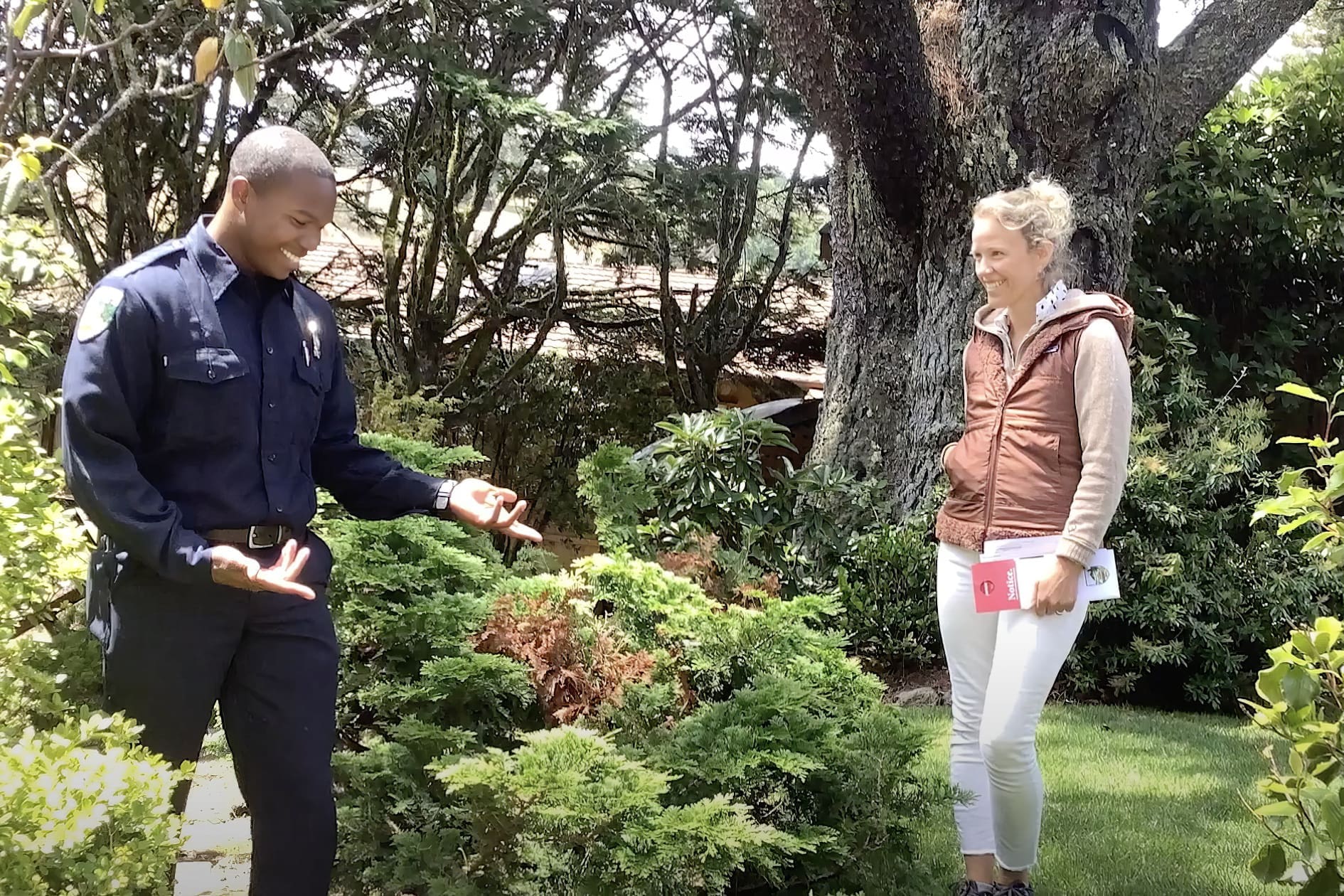
Wildfire Risk Home Evaluations provide personalized guidance through the resulting risk reports that help residents understand practical, prioritized steps to improve defensible space and home hardening. These evaluations cannot guarantee insurance coverage or renewal, but they can help homeowners focus on the work that matters most.
For more information and support, visit:
- Fire Safe Marin for wildfire preparedness, home hardening, defensible space, and Firewise resources.
- Marin Wildfire for Wildfire Risk Home Evaluations and countywide risk reduction programs.
- United Policyholders for insurance buying tips, non-renewal help, claims guidance, and disaster recovery resources.
- California Department of Insurance for consumer assistance, complaint forms, insurer information, and insurance shopping tools.
- California FAIR Plan for backup fire insurance when other options are not available.
The bottom line
Wildfire insurance challenges are real, but residents are not powerless. Review your policy every year, document your belongings, maintain coverage, utilize your personalized Wildfire Risk Home Evaluation report to reduce wildfire risk around your home, and act quickly to replace your coverage if you get a non-renewal notice.
Safer homes, prepared neighborhoods, and informed residents all help Marin move toward a more wildfire-resilient future.

Please note that Fire Safe Marin provides wildfire preparedness information and general guidance, not legal, financial, or insurance advice.
This article was written in partnership with United Policyholders, a non-profit whose mission is to be a trustworthy information resource for consumers of all types of insurance across the United States. They don’t sell insurance or take money from insurance companies. For information, please visit their website.