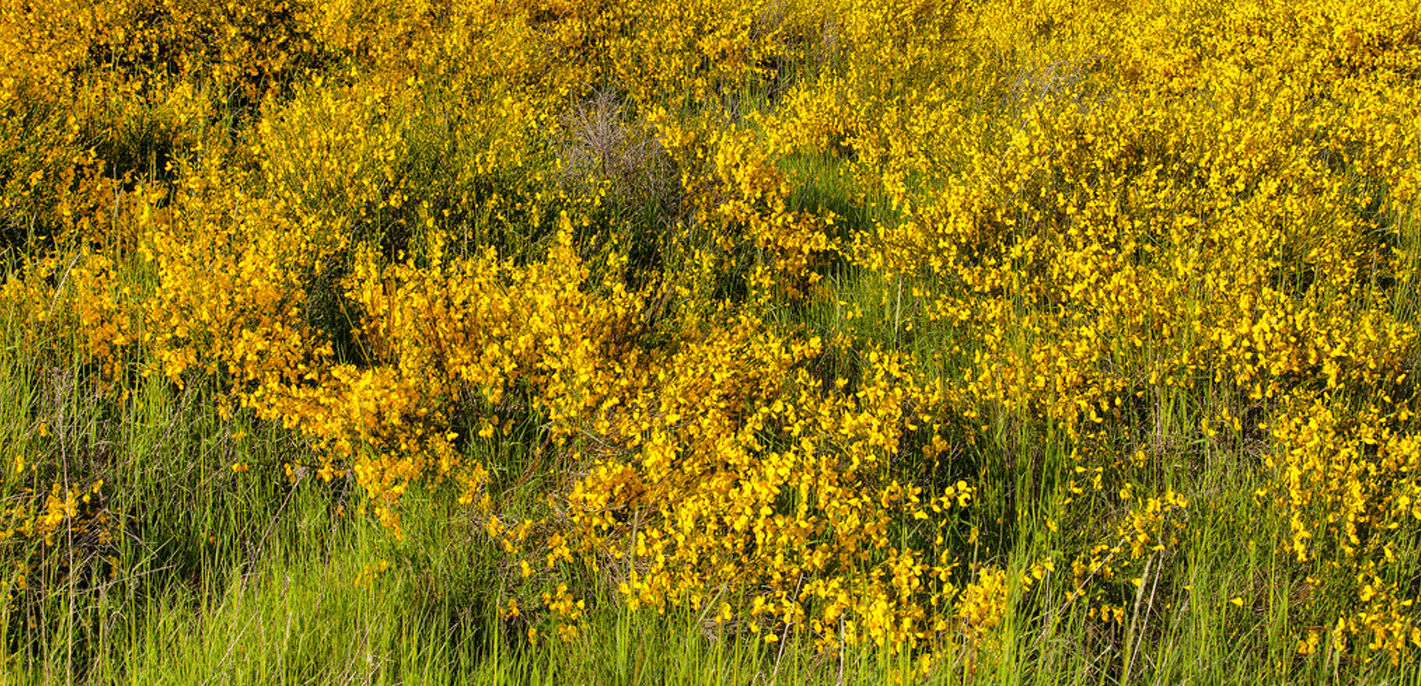
Weather, terrain, and ignition sources all affect wildfire risk. The plants growing across a landscape play a major role in wildfire behavior. Some invasive plants dry earlier, ignite easily, and create connected pathways that allow fire to spread.
This news post is based on a recent Insurance for Good article which explores how invasive vegetation can contribute to more frequent fires and increase risks for nearby communities.
Creating pathways for fire
Invasive plants can crowd out native vegetation and spread across areas through agriculture, development, or other activities. While invasive vegetation in general can affect wildfire, researchers have studied invasive grasses most extensively.
Once established, invasive grasses can replace patchy native vegetation with dense, connected areas of dry fuel. This produces several conditions at once, including how much burnable vegetation is present, how much moisture it holds, how quickly it dries, and whether it creates a continuous path for fire.
A 2019 study cited in the Insurance for Good article found that eight invasive grass species increased the occurrence of wildfire by 230% in 29 ecological regions across the nation.
The grass-fire cycle
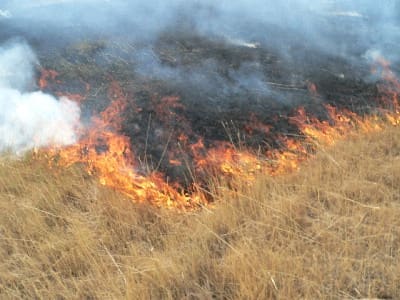
Invasive grasses can create what researchers call the grass-fire cycle. As the grasses spread, the landscape becomes more likely to burn. More frequent fires can then make it harder for native plants to recover, giving invasive grasses more opportunities to take hold and spread further.
Over time, this cycle can turn shrublands and woodlands into grasslands that ignite more easily and more often. Between 1990 and 2020, grassland fires burned more land in the contiguous United States than forest fires and accounted for 64% of homes destroyed by wildfire.
Why this matters for Marin’s communities
Vegetation is one part of wildfire risk that communities can directly address. However, invasive plants may change how a landscape burns before those changes appear in wildfire maps and models. This can make it harder to identify where risk is growing and determine which vegetation treatments will be most effective. Simply counting acres treated or the amount of vegetation removed does not always show whether a project reduced long-term risk.
For residents, better information can help ensure that vegetation work is focused where it can do the most to reduce risk and protect communities. Closer coordination between wildfire and invasive species programs can also help agencies avoid unintended consequences and make better use of available resources when addressing vegetation management.
Understanding where invasive plants are present and how they affect fire behavior can help communities invest in prevention efforts before landscapes become even more fire-prone.
Learn more
- Read the full Insurance for Good article.
- Explore our fire smart landscaping guidance.
- Learn how to choose the right plants for your yard.
- Find out which plants are considered Fire Hazardous Plants.
- See the data on Marin Wildfire’s vegetation removal efforts.
- Read our article about Marin’s efforts to remove the French Broom from our region.